New! Improved! Go there NOW!!
http://shop.jasunni.com/
Discounts! Pre-Orders! Time to shop!


Here is The Qwillery’s list of novels, etc. being published in April 2014. If there is something that we’ve missed, please leave a comment below. Any genre mistakes are ours. Leave a comment below if you feel that the genre is wrong. Also note that this list is always under revision. Publication dates change. We try to keep this as accurate as possible. The most accurate lists usually can be found for each week in The View From Monday posts. Please note that we use the publisher’s publication date in the US.

| TITLE | AUTHOR | SERIES |
| The Goblin Emperor | Katherine Addison | F |
| The Bird Eater | Ania Ahlborn | H |
| Circle of Desire | Keri Arthur | FR – Damask Circle 3 |
| Wild Wolf | Jennifer Ashley | PNR – Shifters Unbound 6 |
| Immortal Hunter (e) | Kait Ballenger | PNR – The Execution Underground 2 |
| Lexicon (h2tp) | Max Barry | SF |
| Dark Eden | Chris Beckett | SF |
| Hecate’s Own | Dana Marie Bell | PNR – Heart’s Desire 2 |
| Covenant | Sabrina Benulis | F/Go – Books of Raziel 2 |
| What the Doctor Ordered | Michael Blumlein | H – Collection |
| The Days of the Deer | Liliana Bodoc | F – Saga of the Borderlands 1 |
| A Killing Notion | Melissa Bourbon | PCM – Magical Dressmaking Mystery 3 |
| Riveted (tp2mm) | Meljean Brook | SPR – Iron Seas 3 |
| The Devil’s Eye (e) | Dawn Brown | GoR – Shivers 10 |
| Blameless (ri) | Gail Carriger | SP – Parasol Protectorate 3 |
| Changeless (ri) | Gail Carriger | SP – Parasol Protectorate 2 |
| Soulless (ri) | Gail Carriger | SP – Parasol Protectorate 1 |
| Upon a Sea of Stars | A. Bertam Chandler | SF – John Grimes Saga 5 |
| Peacemaker | C. J. Cherryh | SF – Foreigner 15 |
| Savage Panet | Stephen Coonts | SF – Saucer 3 |
| Quicksilver Soul | Christine D’Abo | PHR – Shadow Guild 2 |
| The Ugly Woman of Castello di Putti: A Tor.Com Original | A.M. Dellamonica | F |
| Turned | Virna DePaul | PNR – Belladonna Agency 1 |
| The Ophelia Prophecy | Sharon Lynn Fisher | SFR |
| Shards of Time | Lynn Flewelling | F – Nightrunner 7 |
| Magical Misfire (e) | Kimberly Frost | PNR – A Southern Witch Novella |
| Severed | Gary Fry | H |
| Vampire’s Hunger | Cynthia Garner | SFR – Awakening 1 |
| The Revolutions | Felix Gilman | SF/R |
| Legacy of Darkness (e) | Jane Godman | GoR – Shivers 9 |
| The Awakening (ri) | Heather Graham (Shannon Drake) |
PNR – Alliance Vampires 5 |
| Darkening Around Me (e) | Barbara J. Hancock | GoR – Shivers 1 |
| Games Creatures Play | Charlaine Harris (ed) Toni L.P. Kelner (ed) |
UF – Anthology |
| Empty Space: A Haunting (h2tp) | M. John Harrison | SF/H |
| Dream a Little Dream (e) | Megan Hart | PNR |
| Irenicon (D US) | Aidan Harte | F – Wave Trilogy 1 |
| The Crimson Shield | Nathan Hawke | F – Gallow 1 |
| Marked | Alex Hughes | SF – Mindspace Investigations 3 |
| Ghost of a Gamble | Sue Ann Jaffarian | PCM – Ghost of Granny Apples 4 |
| Tempting the Demon | Elle James | PNR |
| Enchanting the Beast | Kathryne Kennedy | PHR – Relics of Merlin 4 |
| Wicked Games | Angela Knight | PNR – Collection |
| Appalachian Overthrow (h2mm) | E.E. Knight | SF – Vampire Earth 10 |
| Baltic Gambit | E.E. Knight | SF – Vampire Earth 11 |
| The Frangipani Hotel | Violet Kupersmith | Gh – Collection |
| When He Was Bad (ri) | Shelly Laurenston Cynthia Eden |
PNR – Stories |
| The Fearful Gates | Ross Lawhead | F – An Ancient Earth 3 |
| Into the Void: Star Wars | Tim Lebbon | SF – Star Wars: Dawn of the Jedi |
| The Forever Knight (h2mm) | John Marco | F – Bronze Knight 1 |
| Reign of Ash | Gail Z. Martin | F – Ascendant Kingdom 2 |
| Drowning in Fire | Hanna Martine | PNR – Elementals 3 |
| Step Back in Time | Ali McNamara | TTR |
| Like a Dead Man Walking | William F. Nolan Jason V. Brock (ed) |
SF/H – Collection |
| Ghost Seer | Robin D. Owens | PNR – Ghost Seer 1 |
| Tomorrow, the Killing | Daniel Polansky | DF – Low Town 2 |
| Stoker’s Manuscript (h2tp) | Royce Prouty | H |
| Prince’s Fire | Amy Raby | FR – Hearts and Thrones 3 |
| Fall | Rod Rees | SF/Dys – Demi-Monde Saga 4 |
| Evil Never Dies | Mick Ridgewell | H |
| Deadroads: A Novel of Supernatural Suspense (D) | Robin Riopelle | Su/Sus |
| Keith Roberts SF Gateway Omnibus | Keith Roberts | SF – SF Gateway Omnibus |
| Shattered Moon | Moira Rogers | PNR – Bloodhounds |
| Black Rose (e) | Jenna Ryan | GoR – Shivers 3 |
| Silence for the Dead | Simone St. James | Go |
| Bob Shaw SF Gateway Omnibus | Bob Shaw | SF – SF Gateway Omnibus |
| Conversations with William Gibson | Patrick A. Smith (ed) | SF – Literary Conversations |
| Running Free | Jorrie Spencer | PNR – Northern Shifters 5 |
| Angel City (h2mm) | Jon Steele | Su/P – Angelus Trilogy 2 |
| The Homecoming (h2tp) | Carsten Stroud | Su/H – Niceville 2 |
| From Civil War to World War | Peter G. Tsouras | AH – Britannia’s Fist Trilogy1 |
| The Seventh Child | Erik Valeur | Go |
| Circle of Blood | Debbie Viguie | F/P – Witch Hunt 3 |
| The Way of All Flesh | Tim Waggoner | H |
| Mark of the Bear | NJ Walters | PNR – Hades’ Carnival 2 |
| The King | J.R. Ward | PNR – Black Dagger Brotherhood 12 |
| Gothic Science Fiction: 1980-2010 | Sara Wasson (ed) Emily Alder (ed) |
LC/Go/SF |
| TITLE | AUTHOR | SERIES |
| The Devil in America: A Tor.Com Original | Kai Ashante Wilson | F |
| TITLE | AUTHOR | SERIES |
| Twisted Miracles (e) | AJ Larrieu | PNR – The Shadowminds |
| Attack the Geek: A Ree Reyes Side-Quest | Michael R. Underwood | UF – Ree Reyes |
| TITLE | AUTHOR | SERIES |
| The Dragon Business | Kevin J. Anderson | F – Dragon Business 1 |
| Mine to Claim (e) | A.C. Arthur | PNR – Shadow Shifters: Damaged Hearts 1 |
| Steles of the Sky | Elizabeth Bear | F – Eternal Sky 3 |
| Shipstar | Gregory Benford Larry Niven |
SF – Bowl of Heaven 2 |
| Balance Point | Robert Buettner | SF – Orphan’s Legacy 3 |
| I Am the New God (e) | Nicole Cushing | F |
| The Word Exchange (D) | Alena Graedon | Dys/Tech |
| Darkest Flame: Part 1 (e) | Donna Grant | PNR – Dark Kings |
| You (h2tp) | Austin Grossman | VG/M |
| The Abomination (h2tp) | Jonathan Holt | M/Th – Carnivia Trilogy 1 |
| Revelations | Paul Antony Jones | SF/Ap/PA – Extinction Point 3 |
| Coldbrook | Tim Lebbon | H |
| No Lasting Burial | Stant Litore | H – Zombie Bible 4 |
| The Girl, the Gold Watch & Everything | John D. MacDonald | SF |
| Promise of Blood (h2tp) | Brian McClellan | F – Powder Mage Trilogy 1 |
| The First Fifteen Lives of Harry August | Claire North | TT |
| Turtle Recall: The Discworld Companion. . .So Far | Terry Pratchett | F – Discworld |
| The Adjacent | Christopher Priest | AH |
| The Islanders (h2tp) | Christopher Priest | AH |
| Gotrek & Felix: The Serpent Queen | Josh Reynolds | F – Gotrek & Felix 15 |
| The Immortal Collection | Eva García Sáenz | F – Saga of the Ancient Family |
| Operation Shield | Joel Shepherd | SF – Cassandra Kresnov 5 |
| Fiend (h2tp) | Peter Stenson | H |
| Welcome to the Monkey House: The Special Edition: Stories | Kurt Vonnegut | SF – Collection |
| A Dance in Blood Velvet | Freda Warrington | DF – Blood 2 |
| Cauldron of Ghosts | David Weber Eric Flint |
SF – Crown of Slaves 3 |
| Dragon Age: The Masked Empire | Patrick Weekes | F – Dragon Age 4 |
| Robot Uprisings | Daniel H. Wilson (ed) John Joseph Adams (ed) |
SF – Anthology |
| TITLE | AUTHOR | SERIES |
| Something Going Around: A Tor.Com Original | Harry Turtledove | SF |
| TITLE | AUTHOR | SERIES |
| City of the Iron Fish | Simon Ings | F |
| The System | Gemma Malley | Dys – The Killables 3 |
| TITLE | AUTHOR | SERIES |
| Biters – The Reborn | Harry Shannon | PA – Journalstone’s Doubledown 4 |
| TITLE | AUTHOR | SERIES |
| The Bend of the World (D) | Jacob Bacharach | LF/F |
| Silver Skin (e) | D.L. McDermott | PNR – Cold Iron 2 |
| Marked By Hades (e) | Reese Monroe | PNR – Bound by Hades 1 |
| TITLE | AUTHOR | SERIES |
| Forbidden (e) | Lori Adams | PNR – Soulkeepers 1 |
| The Line of Polity | Neal Asher | SF – Agent Cormac 2 |
| Transhuman | Ben Bova | SF |
| The Kraken King Part I: The Kraken King and the Scribbling Spinster (e) | Meljean Brook | SPR – Iron Seas |
| Nightmare Ink (e) | Marcella Burnard | UF – Living Ink 1 |
| Pack of Strays | Dana Cameron | UF – Fangborn 2 |
| Green Planets: Ecology and Science Fiction (h2tp) | Gerry Canavan (ed) Kim Stanley Robinson (ed) |
SF – Anthology |
| The Darkling (h2tp) | R. B. Chesterton | Go |
| Winds of Salem (h2tp) | Melissa de la Cruz | F – Witches of East End 3 |
| Lovecraft’s Monsters | Ellen Datlow (ed) | H – Anthology |
| Unwrapped Sky (D) | Rjurik Davidson | F/New Weird |
| When We Fall (e) | Peter Giglio | H |
| Darkest Flame: Part 2 | Donna Grant | PNR – Dark Kings |
| Purple Magic (e) | Lisa Renee Jones | PNR |
| What Mario Scietto Says: A Tor.Com Original (e) | Emmy Laybourne | SF – World of Monument 14 |
| Northanger Abbey | Val McDermid | Mu/Th |
| Horus Heresy: Visions of Heresy | Alan Merrett | SF – Horus Heresy |
| TITLE | AUTHOR | SERIES |
| Aunt Dimity and the Wishing Well | Nancy Atherton | PCM – Aunt Dimity 19 |
| Tithe of the Saviours | A. J. Dalton | F – Chronicles of a Cosmic Warlord |
| TITLE | AUTHOR | SERIES |
| Call of the Siren (e) | Rosalie Lario | PNR – Demons of Infernum 4 |
| Golem in My Glovebox (e) | R.L. Naquin | UF – Monster Haven Story 4 |
| Survive to Dawn (e) | PJ Schnyder | PNR – London Undead 3 |
| TITLE | AUTHOR | SERIES |
| The Furies: A Thriller | Mark Alpert | Th/Science |
| Heaven’s Queen | Rachel Bach | SF – Paradox 3 |
| Secrets in the Shadows (ri) | Jenna Black | PNR – Guardians of the Night 2 |
| The Kraken King Part II: The Kraken King and the Abominable Worm (e) | Meljean Brook | SPR – Iron Seas |
| Deception’s Princess | Esther Friesner | F – Princesses of Myth 7 |
| Darkest Flame: Part 3 (e) | Donna Grant | PNR – Dark Kings |
| Afterparty | Daryl Gregory | SF |
| Cold Wind: A Tor.Com Original | Nicola Griffith | DF |
| East of Ecstasy | Laura Kaye | PNR – Hearts of the Anemoi 4 |
| Ancient Enemy (e) | Michael McBride | H |
| Life’s Lottery | Kim Newman | H |
| Otherwise Engaged | Amanda Quick | PNR – Ladies of Lantern Street 3 |
| The Forever Watch (D) | David Ramirez | SF |
| The Keys to the Realms | Roberta Trahan | F – Dream Stewards 2 |
| The Best of Connie Willis: Award-Winning Stories (h2tp) | Connie Willis | SF – Collection |
| TITLE | AUTHOR | SERIES |
| The End of the End of Everything: A Tor.Com Original | Dale Bailey | SF/H |
| TITLE | AUTHOR | SERIES |
| Joe Ledger: Special Ops | Jonathan Maberry | H – Collection |
| TITLE | AUTHOR | SERIES |
| Vengeance of the Hunter (e) | Angela Highland | F – Rebels of Adalonia 1 |
| Night Child (e) | Lisa Kessler | PNR – Night 3 |
| Star Trek: The Original Series: Seasons of Light and Darkness (e) | Michael A. Martin | SF – Star Trek |
| Ladder to the Red Star (e) | Jael Wye | FTR/SFR – Once Upon a Red World |
| TITLE | AUTHOR | SERIES |
| Silver Mirrors | A. A. Aguirre | SP – Apparatus Infernum 2 |
| Dragons Luck (tp2mm) | Robert Asprin | F – Griffin McCandles 2 |
| Little Knife: A Tor.Com Original (e) | Leigh Bardugo | F |
| The Kraken King Part III: The Kraken King and the Fox’s Den (e) | Meljean Brook | SPR – Iron Seas |
| The Lost Fleet: Beyond the Frontier: Guardian (h2mm) | Jack Campbell | SF – Lost Fleet 9 |
| Earth Afire (h2mm) | Orson Scott Card | SF – First Formic War 1 |
| Dark Serpent | Kylie Chan | UF – Celestial Battle Trilogy 1 |
| The Churn (e) | James S.A. Corey | SF – Expanse Novella |
| Once Bitten, Twice Burned | Cynthia Eden | PNR – Phoenix Fire 2 |
| Warrior’s Curse | Alexa Egan | PHR – Imnada Brotherhood 3 |
| Portal (ri) | Eric Flint Ryk E. Spoor |
SF – Boundary 3 |
| Aliens: The Official Movie Novelization | Alan Dean Foster | SF |
| Forged | Jacquelyn Frank | PNR – World of the Nightwalkers 4 |
| Dragon Age: Asunder (tp2mm) | David Gaider | F – Dragon Age 3 |
| Ink Mage | Victor Gischler | F |
| Two Serpents Rise (h2tp) | Max Gladstone | F – Craft Sequence 2 |
| Darkest Flame | Donna Grant | PNR – Dark Kings 1 |
| Darkest Flame: Part 4 (e) | Donna Grant | PNR – Dark Kings |
| The Tangled Bridge (tp2mm) | Rhodi Hawk | Th/P – Twisted Ladder 2 |
| The Walking Dead: The Road to Woodbury (tp2mm) | Robert Kirkman Jay Bonansinga |
H – Walking Dead 4 |
| Valour and Vanity | Mary Robinette Kowal | F – Glamourist Histories 4 |
| Dreams of Lilacs | Lynn Kurland | PNR – De Piaget |
| Star Trek: The Original Series: Serpents in the Garden | Jeff Mariotte | SF – Star Trek |
| Drift (h2mm) | Jon McGoran | Th – Detective Doyle Carrick and Nola Watkins 1 |
| The Greater Good (tp2mm) | Sandy Mitchell | F – Warhammer 40,000: Ciaphas Cain 9 |
| Limits of Power (tp2mm) | Elizabeth Moon | F – Paladin’s Legacy 4 |
| Grunt Life | Weston Ochse | SF – Task Force Ombra 1 |
| Fire of Stars and Dragons (e) | Melissa Petreshock | PNR |
| Peacemaker | Marianne De Pierres | SF – Peacemaker 1 |
| Morningside Fall | Jay Posey | SF/Ap/PA – Duskwalker Cycle 2 |
| Carpe Jugulum (ri) | Terry Pratchett | F – Discworld 23 |
| The Fifth Elephant (ri) | Terry Pratchett | F – Discworld 24 |
| Jingo (ri) | Terry Pratchett | F – Discworld 21 |
| The Last Continent (ri) | Terry Pratchett | F – Discworld 22 |
| Thornlost | Melanie Rawn | F – Glass Thorns 3 |
| XOM-B | Jeremy Robinson | Th |
| Edge of Tomorrow (Movie Tie-in Edition) | Hiroshi Sakurazaka | SF – All You Need Is Kill 1 |
| Shanghai Sparrow | Gaie Sebold | SP |
| Burning Dawn | Gena Showalter | PNR – Angels of the Dark 3 |
| How to Seduce a Vampire (Without Really Trying) | Kerrelyn Sparks | PNR – Love at Stake 15 |
| Vol’jin: Shadows of the Horde (h2mm) | Michael A. Stackpole | F – World of Warcraft |
| The Redemption Engine | James L. Sutter | F – Pathfinder Tales |
| The Curse Breakers | Denise Grover Swank | UF – Curse Keepers 2 |
| Ithanalin’s Restoration (ri) | Lawrence Watt-Evans | F – Legends of Ethshar 8 |
| House of Steel: The Honorverse Companion | David Weber | SF – Honor Harrington |
| Chimera (h2mm) | David Wellington | Th – Jim Chapel Missions 1 |
| The Blood of Alexander (D) | Tom Wilde | Th |
| Sibs (ri) | F. Paul Wilson | H |
| TITLE | AUTHOR | SERIES |
| Multiverse: Exploring Poul Anderson’s Worlds | Greg Bear (ed) Gardner Dozois (ed) |
SF – Anthology |
| Greg Egan | Karen Burnham | SF – Modern Masters of Science Fiction |
| Elements | Suzanne Church | SF/F/H – Collection |
| The Book of Silverberg | Gardner Dozois (ed) William Schafer (ed) |
SF – Anthology |
| Jack in the Green | Charles de Lint | F |
D – Debut
e – eBook
h2mm – Hardcover to Mass Market Paperback
h2tp – Hardcover to Trade Paperback
ri – Reissue or Reprint
tp2mm – Trade to Mass Market Paperback
AH – Alternate History
Ap – Apocalyptic
DF – Dark Fantasy
Dys – Dystopia
F – Fantasy
FR – Fantasy Romance
FTR – Folk Tale Romance
Gh – Ghosts
Go – Gothic
GoR – Gothic Romance
H – Horror
LC – Literary Criticism
LF – Leterary Fiction
M – Mystery
P – Paranormal
PCM – Paranormal Cozy Mystery
PA – Post Apocalyptic
PHR – Paranormal Historical Romance
PNR – Paranormal Romance
SF – Science Fiction
SFR – Science Fiction Romance
SP – Steampunk
SPR – Steampunk Romance
Su – Supernatural
Sus – Suspense
Tech – Technological
Th – Thriller
TTR – Time Travel Romance
UF – Urban Fantasy
VG – Video Games

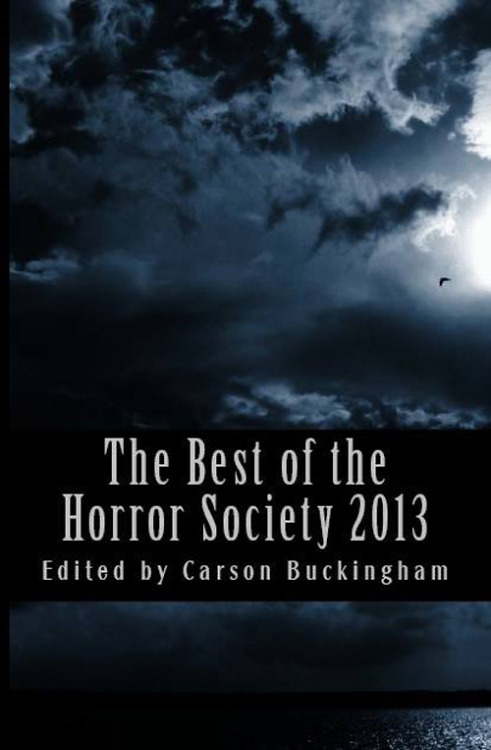
The Best of The Horror Society 2013, edited by Carson Buckingham, The Horror Society/CreateSpace Independent Publishing Platform, 2013. Info: createspace.com.
“A central coast trip that leads to devastating consequences for wine collectors. An adjoining hotel room that isn’t what it seems. A long bus trip with a stopover in an eerie little town. You’ll visit these places and more in this volume. Or how about the old woman with the strange plant? Or the odd little boy selling lemonade? Perhaps the sideshow lady who just smells so good? You’ll meet them all at the turn of a page and they will remain with you long after the book is closed. The Best of the Horror Society 2013 is an anthology of the weird, the wonderful, and the downright wicked. Within you will discover not only the best of emerging horror writers but seasoned pros whose names you will no doubt recognize as well. So turn out the lights, pull up a chair beside the nearest roaring fireplace and enjoy the ride.”
Contents:
FOREWORD – Scott M. Goriscak
INTRODUCTION – Carson Buckingham
CEREMONY – William F. Nolan
TENDRILS NEVER LIE – Kevin A. Ranson
THE MASK – Lisamarie Lamb
LEMMINAID – Carson Buckingham
THE CENTRAL COAST – Jason V. Brock
WHITE HELL, WISCONSIN – Weldon Burge
VICTIMIZED – Richard Thomas
NORMAL IS RELATIVE – Dan Dillard
THE PROCEDURE – Doug Lamoreux
THE LITTLE CHURCH OF SAFE CROSSING – Joe McKinney
MADELEINE – Julianne Snow
IT HAS TEETH – Christian A. Larsen
MASQUERADE – Dave Jeffery
BLACK BIRD – Rose Blackthorn
ADJOINING ROOMS – Scott M. Goriscak
THE INSPIRATION & HORROR OF GEORGE & HUGH – Nicholas Grabowsky
THE CLOWN – Henry Snider
MOVING DAY – Mark Onspaugh
ELLEN – Lee Pletzers
DADDY – Aaron Warwick Dries
SOFT LIKE HER – Charles Colyott
VENUS – L.L. Soares
THE LUMINOUS VEIL – Ian Rogers
BEER & WORMS – T.E. Grau
BLACK MARY – Mercedes M. Yardley
THE BOY IN THE ELEVATOR – Robert S. Wilson
WEIRD – Dean M. Drinkel
HOTTIES – Mort Castle
10:00 am |
Novembre 17 2013
| 1 nota


Nolan on
Bradbury
William
F. Nolan; edited by S.T. Joshi
Hippocampus
Press, 2013
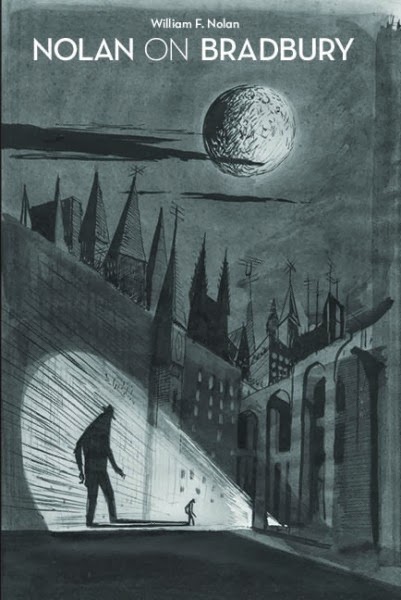
Nolan
on Bradbury
is a fascinating exploration into two stellar figures in speculative fiction,
their relationship over sixty years, and the intellectual cross-fertilization
that can occur when such minds meet and share.
More than a personal account and less
than an academic study (in all of the right ways), the book allows readers a kind
of continuous insight into a friendship and a working exchange. Following
introductory materials by Jason V. Brock, S. T. Joshi, and Ray Bradbury himself
(writing about Nolan), the book opens onto a series of chronologically arranged
articles and essays—including introductions and afterwords to a number of books—in
which Nolan speaks about Bradbury, beginning with their first encounters and
Nolan’s responses to them (1952) and concluding with Nolan’s “My Personal
Evaluation of Ray’s Finest Stories” (2013). Joshi comments in his introduction
that there is a certain level of necessary redundancy in the accounts, and he
is correct; key episodes in their friendship recur frequently, often using the
same sentences and vocabulary. But that is as it should be. The repetitions
remind readers that they are following a six-decade long series of conclusions
on Nolan’s part; the details of Bradbury’s career and influence may—and must—shift
as the essays progress, but at core, the essence of Bradbury remains the same.
Each repetition is placed into a different context and thereby gains depth and
resonance, linking the disparate essays into a unified whole.
The second major section, “Stories,”
presents Nolan’s fictions that he defines as either about Bradbury or
influenced by Bradbury’s style and approach. They range from serious stories,
such as “And Miles to Go Before I Sleep” and “To Serve the Ship,” to
exquisitely modulated parodies and satires, such as the perfectly titled “The
Dandelion Chronicles”—a loving tribute to Bradbury that encompasses most of his
recurring themes as well as his signature style. Each is distinctly Nolan; none could have been written without his
having first met Ray Bradbury.
“Tributes to Ray Bradbury” and “Afterword:
The Return of Ray B.” round off the volume by giving space to Nolan, Brock,
John C. Tibbetts, Joshi, and Greg Bear to speak personally and, as it were,
conclusively about Bradbury and his influence. Each offers more insight into a
complex, multi-faceted, tremendously influential genius. Each is much
appreciated.
The final part is a short but useful
bibliography of major works, collections, stories, and other writings by both
Nolan and Bradbury. It is an appropriate capstone to this involving study of
writing, writers, friends, and friendships.


William F. Nolan is perhaps best known for coauthoring the novel Logan’s Run with George Clayton Johnson, and has written hundreds of pieces, from poetry to nonfiction to prose. He also had a long career in the movie industry, and co-wrote the screenplay for the 1976 horror film Burnt Offerings which starred Karen Black and Bette Davis. Nolan has also been a prolific editor of collections (by others), and anthologies, frequently with Jason V. Brock. He has received the Living Legend in Dark Fantasy award by the International Horror Guild in 2002. In 2010, he received the Lifetime Achievement Stoker award from the Horror Writers Association (HWA).
Jason V Brock is an American author, artist, editor and director. He is the CEO and co-founder (with his wife, Sunni) of JaSunni Productions, LLC, whose documentary films include the controversial Charles Beaumont: The Short Life of Twilight Zone’s Magic Man, andThe AckerMonster Chronicles. His novella, Milton’s Children, was published by Bad Moon Books in early 2013. He has partnered with William F. Nolan as co-editor on several anthologies. They most recently worked together on Tales from William F. Nolan’s Dark Universe comic book adaptation of Nolan short stories. (Available from Bluewater Productions).
DARK UNIVERSE is meant to showcase graphic adaptations of stories contained within the DARK UNIVERSE omnibus, a collection of short works by author Nolan. Plans are to adapt these stories into six individual issues and then later collect them all in a trade paperback or hardcover edition. (Note: A review of the first three issues was featured on this site in February 2013. An updated review will appear on this site shortly. )
Further insights regarding the production of Tales from William F. Nolan’s Dark Universe were obtained during a recent conversation with the authors:

Why adapt Dark Universe for comics? Why not an audio presentation, such as a CD? Or a movie or TV series? Even a stage play?
Jason V Brock: It’s a natural, really. I mean, Bill’s (Nolan) stories are visual and have a lot of visceral impact, so when we put the original deal together with Bluewater for Logan’s Run: Last Day and the subsequent Logan comics, we asked for a mini-series of the horror titles. Plus, once they come out as comics, then the plan is to collect them together in a graphic novel format with an introduction from the two of us. Should be quite a package—
William F. Nolan: Exactly. Darren (Darren G. Davis, publisher) at Bluewater was working on a Vincent Price series at one time as well, so it was a logical extension of that idea. I’ve always liked adaptations of my work into comics, which has happened on other occasions, so when we got this going, I asked to adapt half, and wanted Jason to adapt the rest. We did six stories apiece, so twelve total. They turned out well, I think…
Strangely enough, I did have an audio version of several of my stories done by an outfit in San Francisco. We recorded them with sound effects, actors, and full introductions read by me. It never materialized, unfortunately.
Brock: Yes, it’s too bad. I was with you during the recording of the intros. They were to be streaming on the web, then CDs later.
Nolan: Right. An anthology movie would never work, for the same reason an anthology TV show wouldn’t – no one seems interested in that format these days. Now a stage play is an interesting idea. I wrote one about Dashiell Hammett called Dash that’s been performed a few times.
Whose idea was it to do a comic book version of select stories?
Nolan: Mine, as I recall.
Brock: That’s correct.
How hard is it to adapt? Are certain stories selected because of ease of adaptation? Or, other criteria? Are there some stories that you would like to adapt to comics that aren’t possible because of content or difficulty to translate to a visual medium?
Brock: Adapting stories is harder in some ways, and, like film or TV adaptations, sometimes one has to alter the original story to achieve what the visual medium of comics requires—

Nolan: That’s right. People never understand that about movies or television. Sometimes you have to rewrite or rework things, combine elements, drop things, and so on. Doing a straight “literal” adaptation almost never works. The only exception I can think of is The Maltese Falcon. It was a near verbatim copy of the book, but that’s another story…
We each chose the stories we wanted to do; I adapted the stories of mine that I felt had the best characters (‘The Halloween Man’, ‘Major Prevue Here Tonite’, ‘Heart’s Blood’, ‘Ceremony’, ‘Starblood’, and ‘The Partnership’). They are some of my favorites in the collection (Nolan’s Stealth Press horror omnibus Dark Universe). Jason really did a great job, though! The stories he picked were very hard to adapt, I think. I know I couldn’t have done them! And he pulled it off beautifully, I might add.
Brock: Much appreciated. It was fun. As you say, I had to change a few things to make them work, but they came together well… My main criteria were I wanted to do something memorable, something that doesn’t normally get adapted. Plus, we wanted to avoid things that others had adapted previously, too.
(Brock adapted the following stories: ‘The Pool’, ‘Vympyre’, ‘Him, Her, Them’, ‘The Giant Man’, ‘Boyfren’, and ‘A Real Nice Guy’.)
Is there a new revised print edition of Dark Universe the anthology coming to market?
Brock: Actually, yes, that’s in the works. I am the editor on Bill’s upcoming new collection, which was originally to be published by Arkham House, but which fell through with their apparent dissolution. Too bad, as it would have been an interesting fit for them, and is pretty much completed. I was able to garner interest for it from the fantastic Centipede Press, however, and I believe it should be out in time for the World Fantasy Convention in Brighton, England later this year, which we will all be attending. It’s called Like a Dead Man Walking and Other Shadow Tales, and will feature about 90% new, unpublished material, with a few classic reprints to round it out. Later, Jerad (the publisher) is planning on a huge, current Best Of William F. Nolan that I convinced him was a good follow-up to this, and that will be, I believe, a part of his Masters of the Weird Tale series. It will have science fiction and horror, as well as some literary works and poetry.
How are the artists selected for the stories?
Brock: Darren G. Davis (the president of Bluewater) handles all of that—
Nolan: We do get some say over the type of art, but he does the artist selection, as Jason pointed out. I love the art in the Tales from William F. Nolan’s Dark Universe series, and really liked the art in most of the Logan series, especially the first four issues.
How much of the comic layout and panel art is determined before assigning to the artist?
Nolan: Well I write the scripts for the comics as a sort of screenplay format, with basic scene setting, character description and so on, but I use all the dialogue from the stories, and the plots. Jason works a little differently, I know…
Brock: True—I prefer to write very detailed scripts, and break down each scene into panels with a lot of specifics for the artist. I had to do that, as a few of the ones I adapted were quite short, and these had to carry over half of a twenty-two page comic. Of course, I use the setting, plot, and dialogue (mostly) from the stories…
How much does the artist contribute?
Brock: For me, not a tremendous amount in terms of characterization and paneling; in terms of artwork and the “look,” a great deal…
How easy or hard is it to translate these stories to an illustrated medium?
Nolan: I grew up on comics, and I used to write comics with my departed pal Charles Beaumont (The Twilight Zone), but they weren’t horror titles. I like adapting works into other mediums, so it’s fairly simple for me—
Brock: Well, it depends a great deal on the tale that you’re adapting, I think. Some are easy and others are more difficult.
Are there any benefits to a comics version of these stories? More impact? Able to tell a story in less pages because of the visual/text capabilities?
Brock: I think it’s a great way to introduce younger readers to new stories. The challenge was to expand rather than condense, as Bill has a spare writing style, so I really had to wring more from the story without resorting to a padded feel.
Nolan: I agree with Jason. Young people love the visual impact, so it gets them to read more, and if they like these, then maybe they’ll check out the books we do.
Compare this work to your work on the Logan’s Run comic. Was it easier or more difficult to adapt, Dark Universe or Logan’s Run?
Nolan: We didn’t actually adapt any of the Logan series—

Brock: That’s true, though I have done a one-shot based in that world called Logan’s Run: Solo. It’s an original piece, however, and not an adaptation. The story is about a very far-future Logan and what happens to him as an aged Runner. On Logan’s Run: Last Day we were consultants, and did the costume designs and plotting of the story over the first six issue arc, then Paul J. Salamoff wrote it.
Nolan: I have to say that I’ve read Logan’s Run: Solo and thought it was just fantastic. Ingenious what Jason did with the character and the scenario. It’s going to be an aspect of the upcoming book we’re planning to co-write in the Logan universe called Logan Falls, which will turn the franchise upside down—
Brock: Well, I hope it does… It will also incorporate, like Logan’s Run: Solo, the pieces from the Bluewater Logan’s Run: Last Day series called ‘Future History’, which I created but was not credited with. I’m reclaiming all of that back-story, as it was mine anyway, and both of us felt was one of the more interesting aspects of the series. It was a way of modernizing the older elements of the Logan saga; I want to deconstruct the “Logan mythos” and do more with the characters.
Would you like to work in comics again? On what sort of project? Do you have any plans to do so?
Nolan: Of course. I love comics!
Brock: Yes. I enjoy the medium a lot. We are doing a couple of things currently, but can’t discuss them yet.
What else are you presently working on?
Nolan: I’m always working on about eight or ten books at any one time… Jason mentioned a few of them. Hippocampus Press is doing a collection of my writings about Ray Bradbury which is due out very soon called Nolan on Bradbury; it’s edited by S. T. Joshi, and has pieces from Ray, Jason, S. T., and Greg Bear as well… And of course waiting on the Logan’s Run re-make!
Brock: Well, we just dropped our documentary on Forrest J Ackerman (The AckerMonster Chronicles!) to rave reviews, so Sunni (my wife and film editor) and I are promoting that. As I said, Bill, Sunni, and I will be at several cons throughout 2013, from World Fantasy to World Horror, to Norwescon, and OryCon… Then I just had my standalone novella, Milton’s Children, come out from Bad Moon Books. Hippocampus Press is also releasing my first short story collection, Simulacrum and Other Possible Realities soon, and I’m still working on NAMELESS which is a biannual digest… You can grab that in PDF and print format. The work doesn’t end!
NEXT: A REVIEW OF ALL ISSUES PUBLISHED TO DATE OF WILLIAM F. NOLAN’S TALES FROM THE DARK UNIVERSE.