Horror

Thumbnail

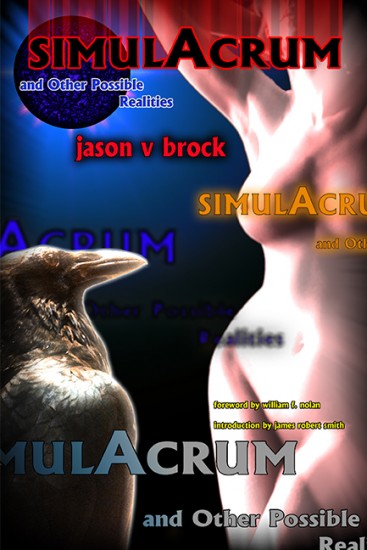
19 Jul: Fiction Tips Weekly: SimulAcrum: A new collection by Jason V. Brock

In a very rudimentary sense
simulacrum, derived from Latin, means likeness or similarity, a representation
or image. One thinks of the mirror image of one’s self it is true in form
however reversed but lacks the actual substance of the original that casts the
reflection, i.e. the human form standing before the mirror. What is dark
fiction, horror, but visceral writings of the gut that inevitably represent the
deeper truth of what and who we are and what our nature is truly about. These
genres reveal through a vial all that human kind represses, true to form, but
lacking enough to be a story, and dream, or a nightmare.

Jason V Brock (without the
period) is a visceral writer. As we can see from this delightful anthology of
his works, he can rip to the gut and have you attempting
desperately to stuff your entrails back inside before it’s too late.

In the forward written by the
legendary William F. Nolan, the writer remarks “He (Jason) is a deep thinking
individual, even a provocateur, and his work is sometimes extreme, dark and
gruesome…he uses it to expose some flaw or weakness in a character.”

My own experience with Jason
and his writing tells me that there will always be those that exclaim the man
is too controversial. The problem with those views is that it is all too
revealing of the gainsayers that are most likely thick with denial. People,
critical examiners really, that just don’t want to hear the truth. The fact is,
if they don’t want to hear about their own unlovely nature, then they really
need to get out of the horror industry all together because they are doing no
justice there. If there is one thing that Jason’s stories tell us about, it’s
about our lives, our nature, our truth, our self. And through a representation
of that visceral truth, we can see clear to original that lies beyond in the
land of reality.

The collection kicks off with
“What the Dead Eyes Behold.” An image of
that very moment when you look into your significant other’s eyes and are
overwhelmed with the very deepest feelings of love so much that you want to
preserve the moment forever, and ever… and ever!

Next up “The Central Coast,” a
story previously published in Dark Discoveries magazine, starts us off in the
middle trauma and shock. Social gatherings can be horrific enough, without even
coming close to this event. Brock displays the same expertise in setting up the
reader in this story as any Stephen King has written. He enthralls the reader
with terribly vivid scene irresistible to our curious nature only to bring that
shocking and terrible discovery you’d wished you’d never come upon. One thing
is for sure, if you are a wine connoisseur, you might think twice about that
rare estate reserve you’ve had eyes on. It may be more expensive than you
think.

It’s impossible to describe in
a review the depth experienced in reading anything Brock has penned.
Descriptions are as the title suggests only a representation of the actual
experience of reading his work. There are many stories in this collection,
fifteen plus his new novella “Milton’s Children,” but I find it irresistible
not to spoil some delight in each of them. Therefore I’ll leave the rest for
your own experience, an experience that comes highly regarded and suggested.

— Review by Cyrus Wraith Walker

Thumbnail

18 Jul: Pictures from the World Horror Convention in New Orleans

Hello. I am not as cranky as this picture suggests. Stick with me and I promise to smile.

image
This is my Bitchy Resting Face

A week ago I was in New Orleans for the

Bram Stoker Awards Weekend incorporating World Horror Convention

— which for brevity’s sake I’ll refer to as WHC.

I stayed at the convention venue: the Hotel Monteleone in the French Quarter. My friend and fellow writer, Eliza Hirsch, shared a room.

I arrived Wednesday night with no trouble–unlike Eliza, whose flight was canceled, but that’s her story to tell. I rode the Airport Shuttle into the French Quarter, checked in to the hotel, dropped off my stuff, and went in search of a grocery store. I was going on an all day tour the following morning and I’d been told there wouldn’t be time to stop for food, so I stocked up on bread, blueberry preserves, peanut butter, and a lot of fruit. There was a minor incident when my bag fell off the counter while I was paying and the jar of preserves shattered inside the bag, but the kind staff replaced the jar and I only had to spend a little time washing blueberry paste off my bananas.

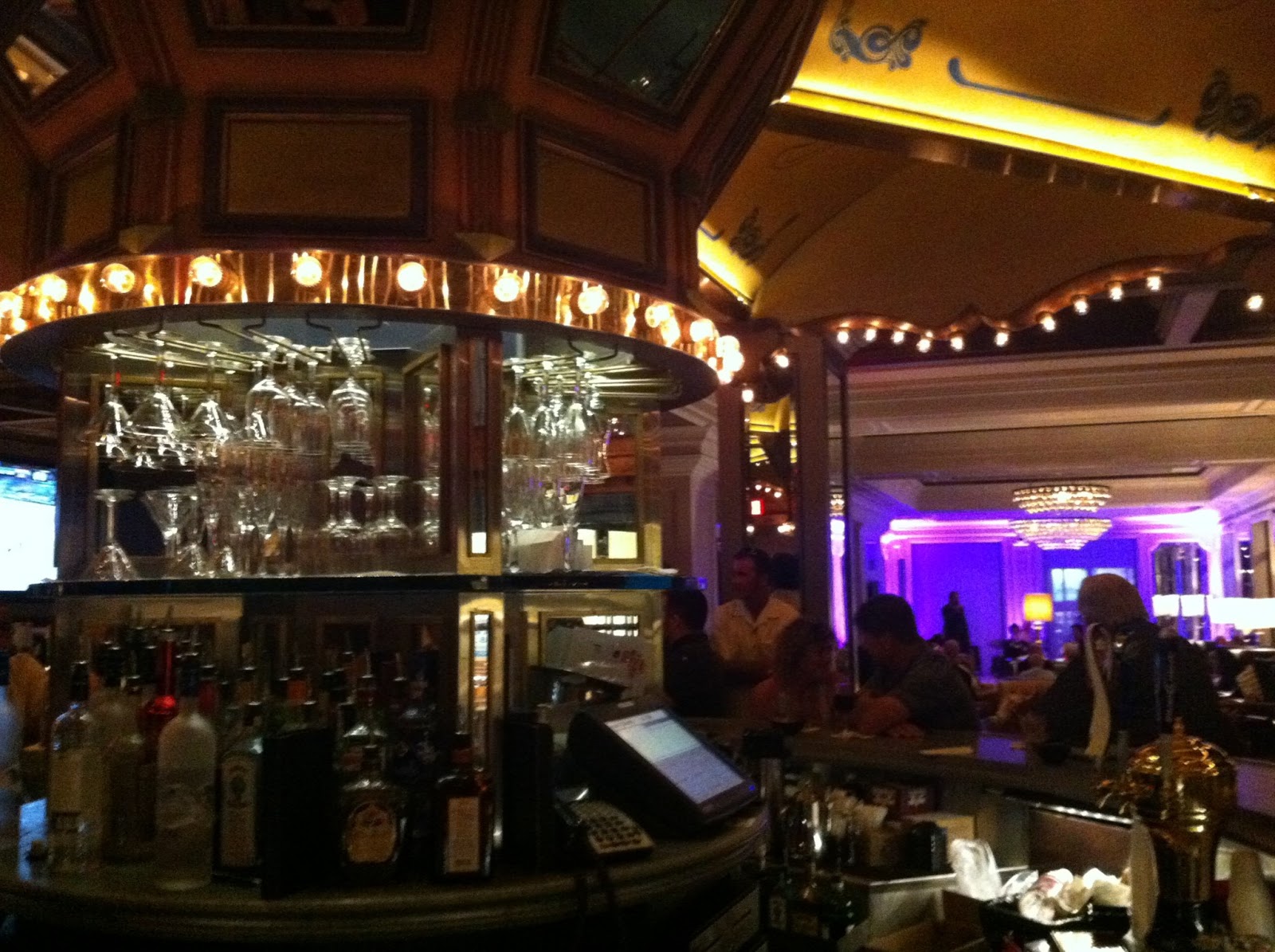
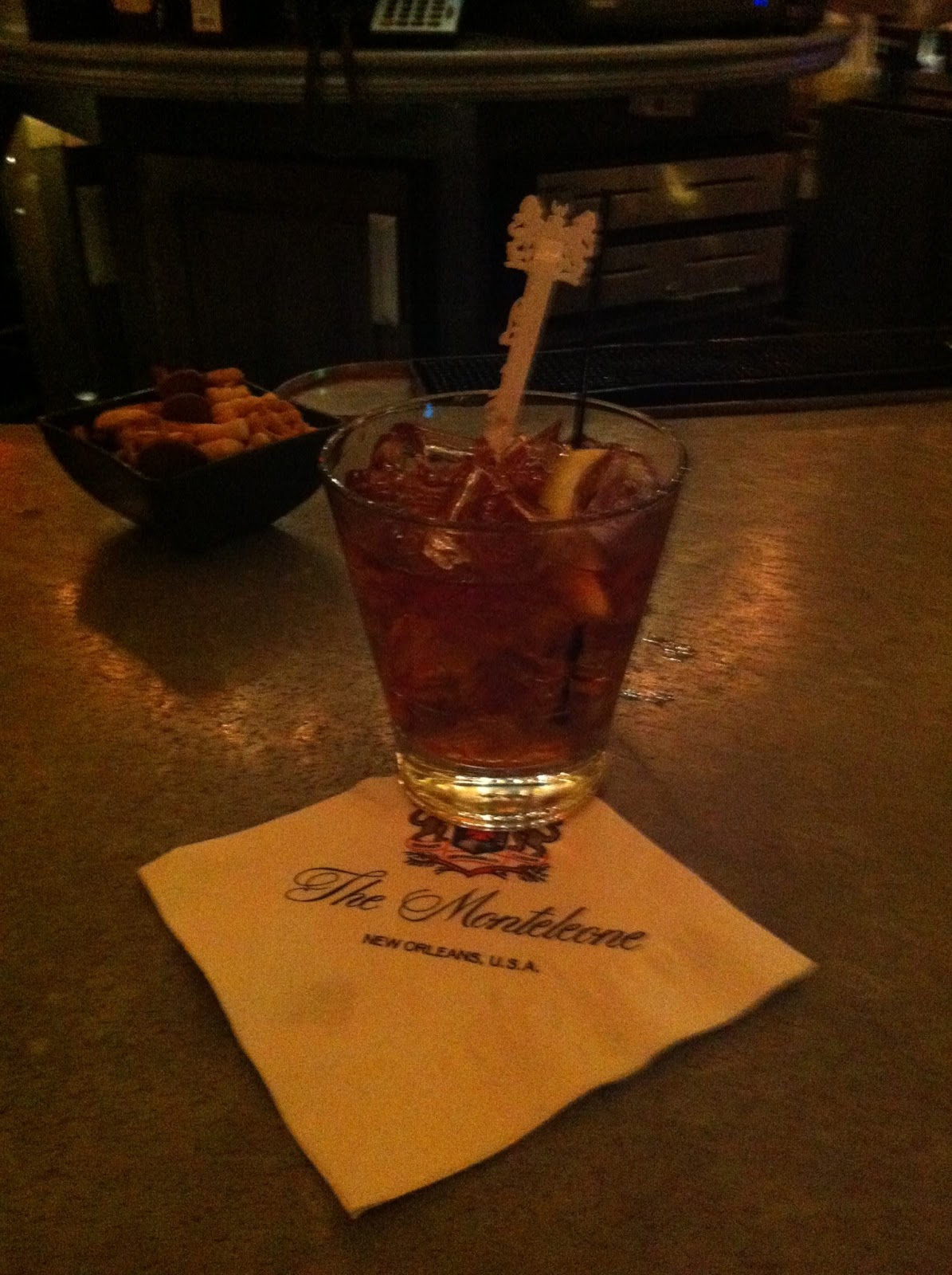
The weather was clear during my excursion, humid, and hot. I assembled my lunch for the next day, had a cocktail in the hotel bar (it spins slowly, hence the name Carousel) and went to bed.

image
A dim view of the Carousel Bar at Hotel Monteleone

image
A Vieux Carre at the Hotel Monteleone

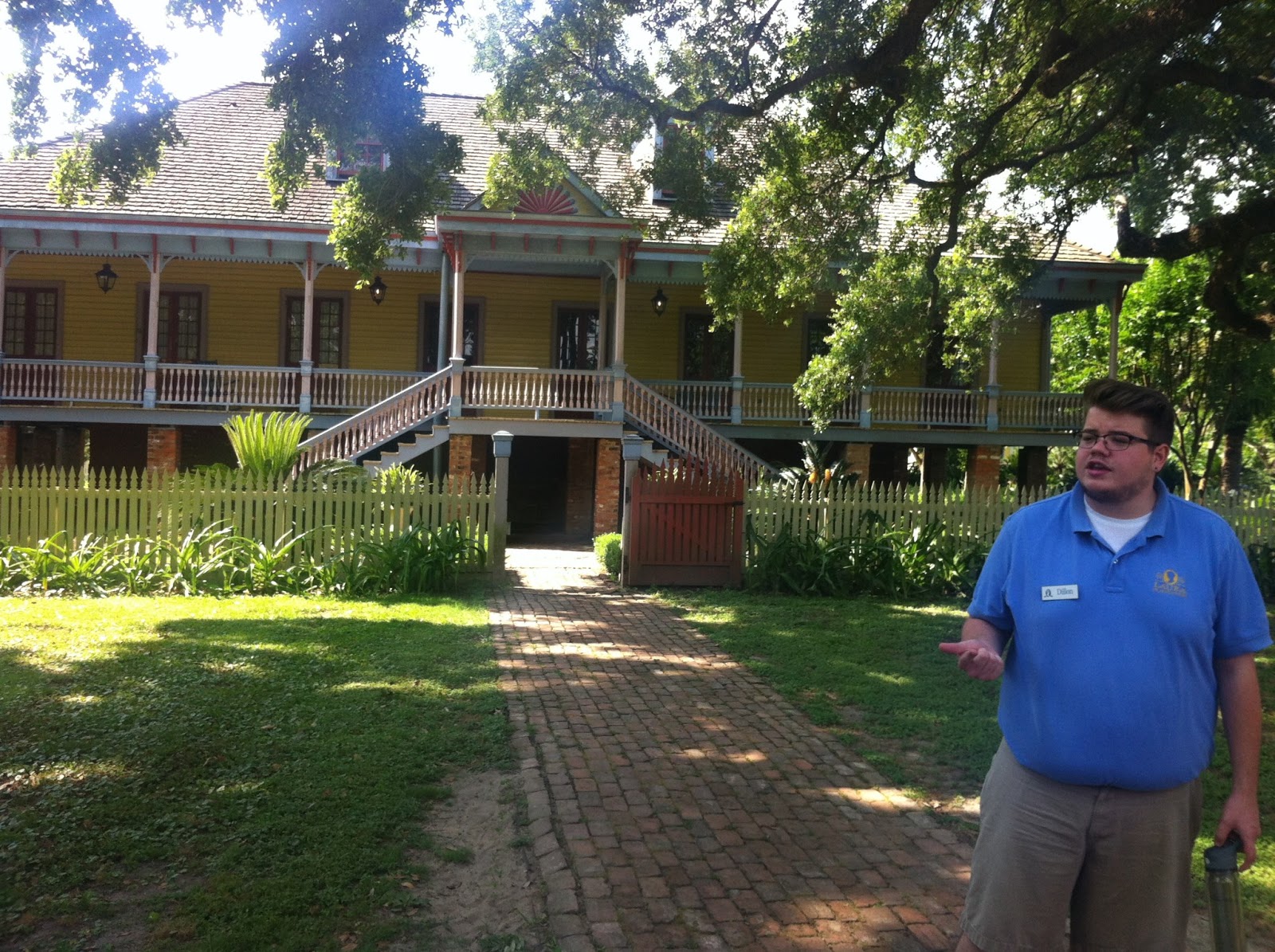
Thursday morning I ate breakfast in the hotel restaurant, Criollo–a delicious egg white omelet filled with vegetables and a spicy tomato sauce, plus lots of coffee. Then I caught the tour bus and we headed out to the Laura Plantation.

image
Front of Laura — a Creole Plantation, comprehensive info here

image
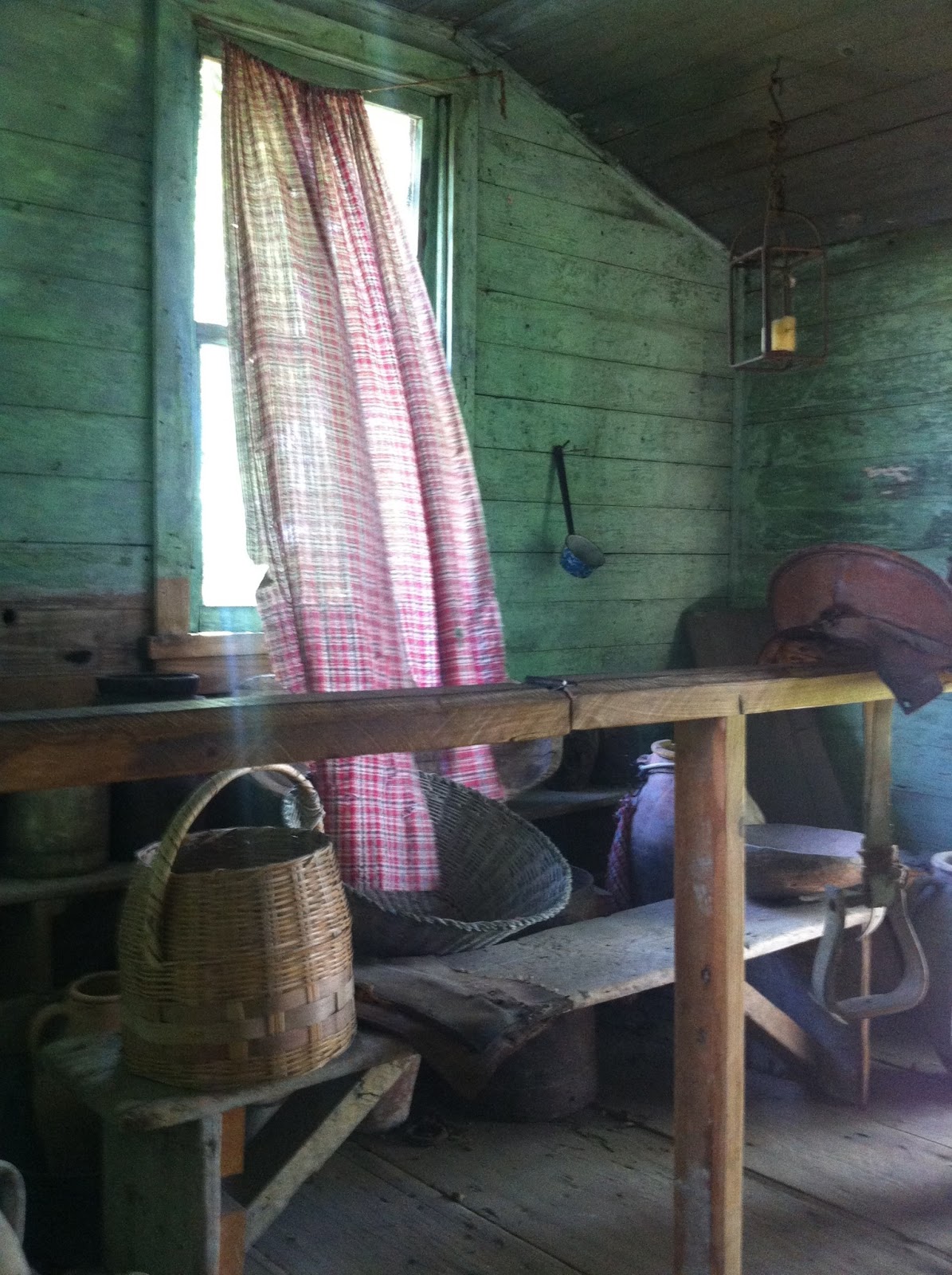
Inside of one of the Laura Plantation slave quarters where folklorists recorded the Br’er Rabbit tales

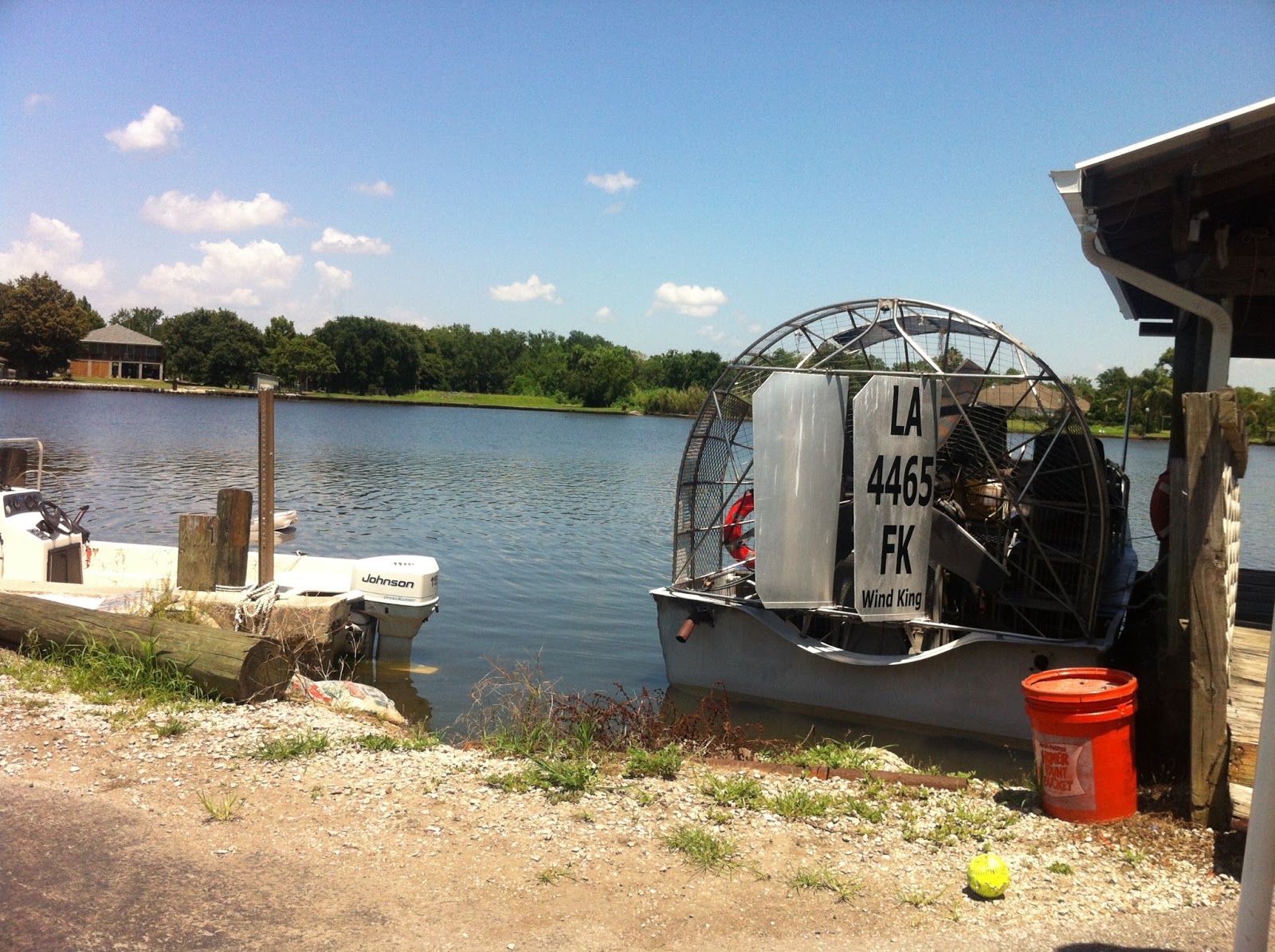
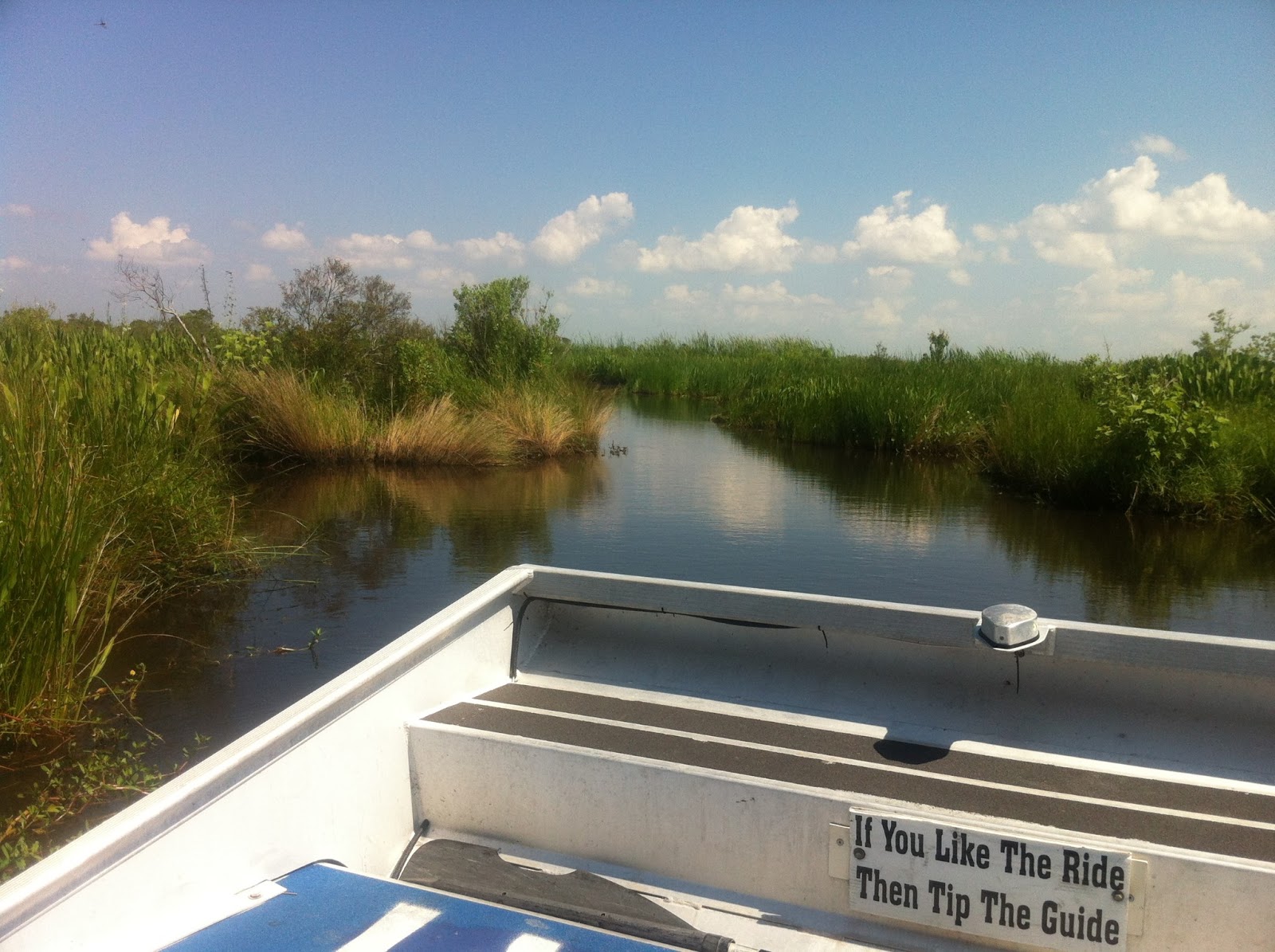
Soon enough we were on our way to the swamp. I had arranged for a six-person airboat tour of the swamp, but lucked out. Only four of us were on the boat.

image
Waiting for my turn on the airboat. Not pictured: slathering on sunscreen.

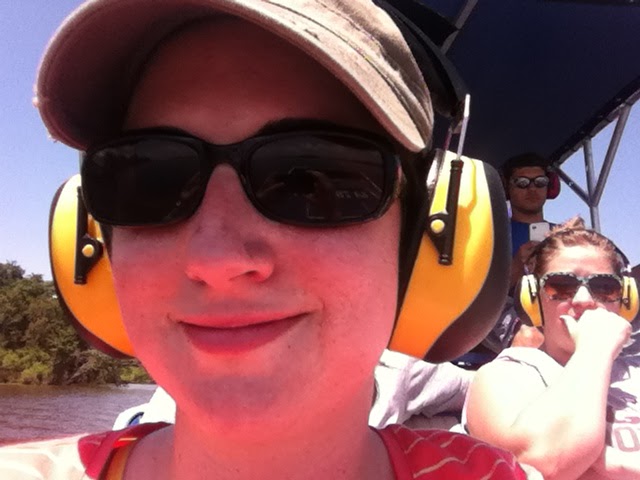
image
My view on the airboat

image
“Airboat Self-Portrait” is the name of my next band

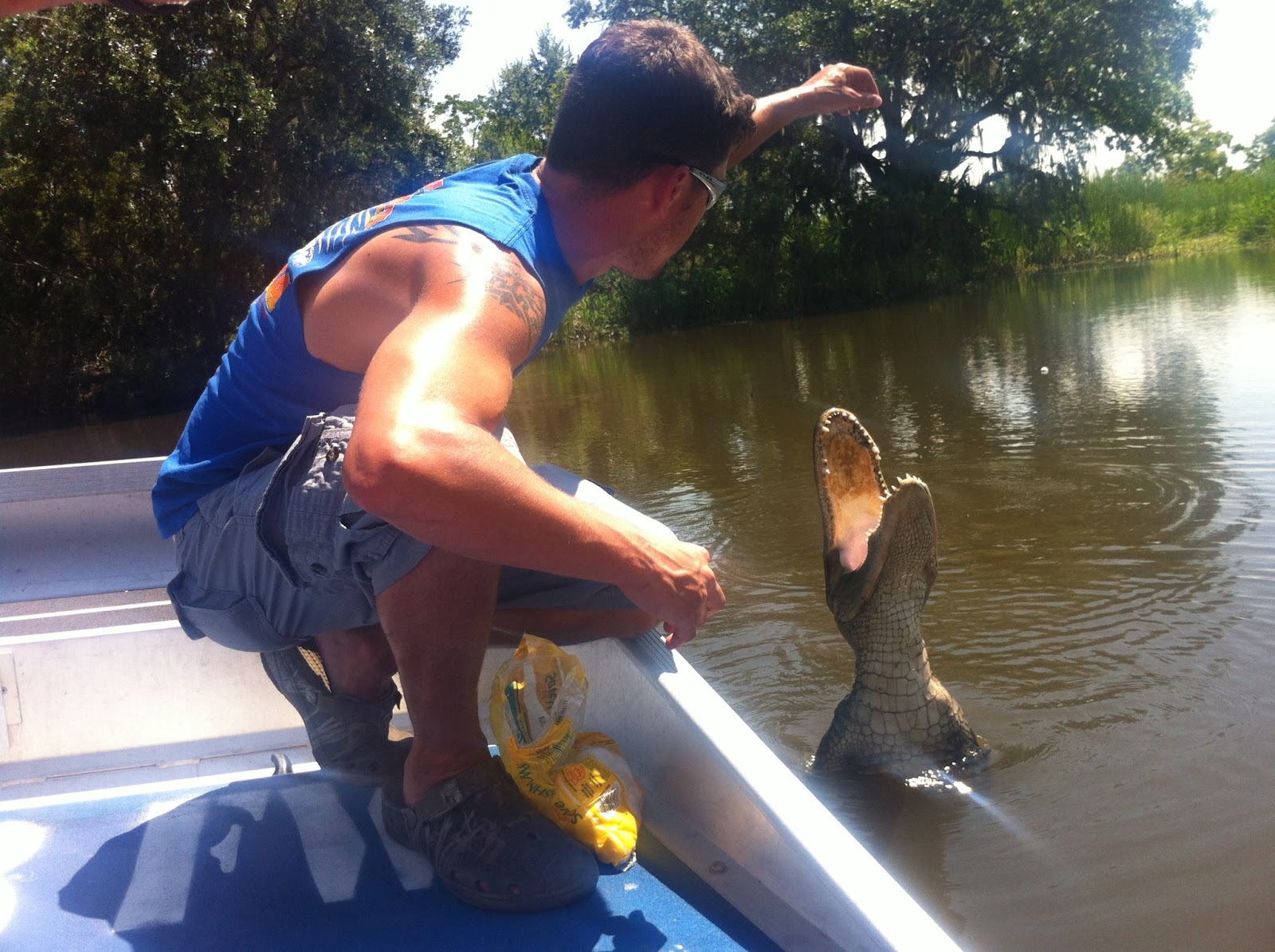
image
Our guide feeds marshmallows to a gator

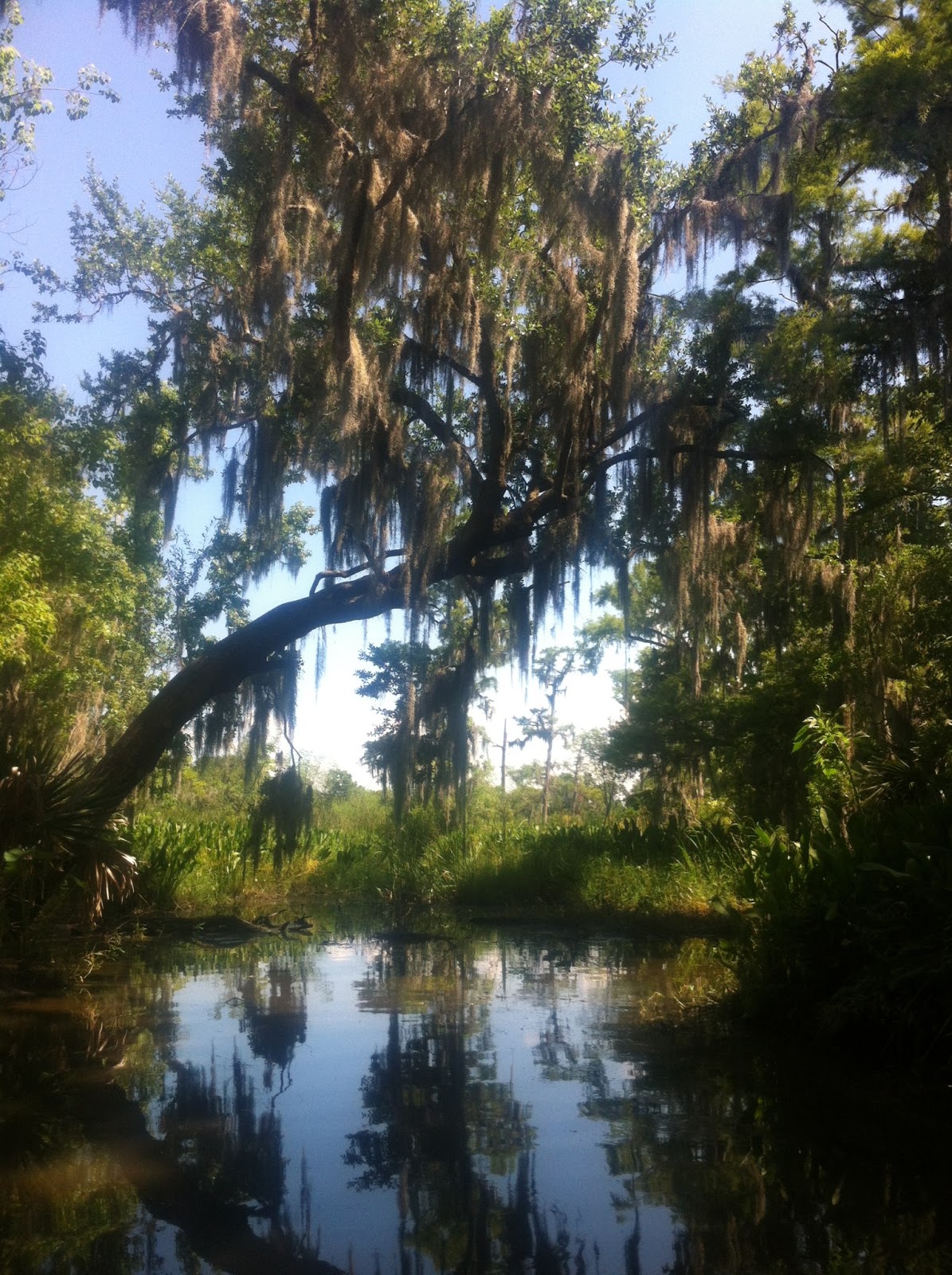
image
Spanish Moss is not a moss. It is related to the pineapple.

image
A final stop in the marsh, talking about collecting gator eggs

Overall I really enjoyed the airboat swamp tour. I compared notes with some folks who took the regular flat-bottomed boat and they interacted with more wildlife, but the ride through the swamp was exhilarating.

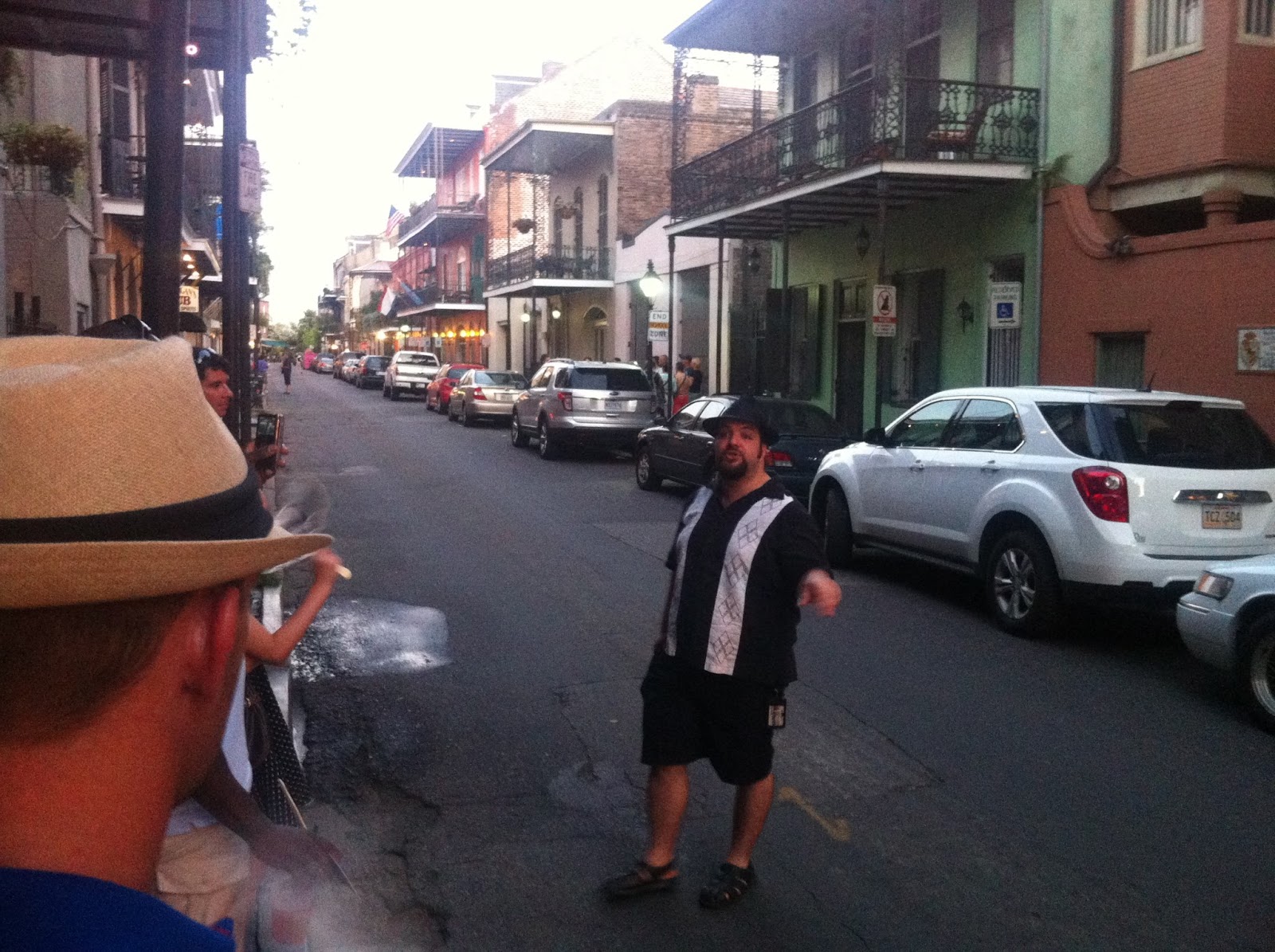
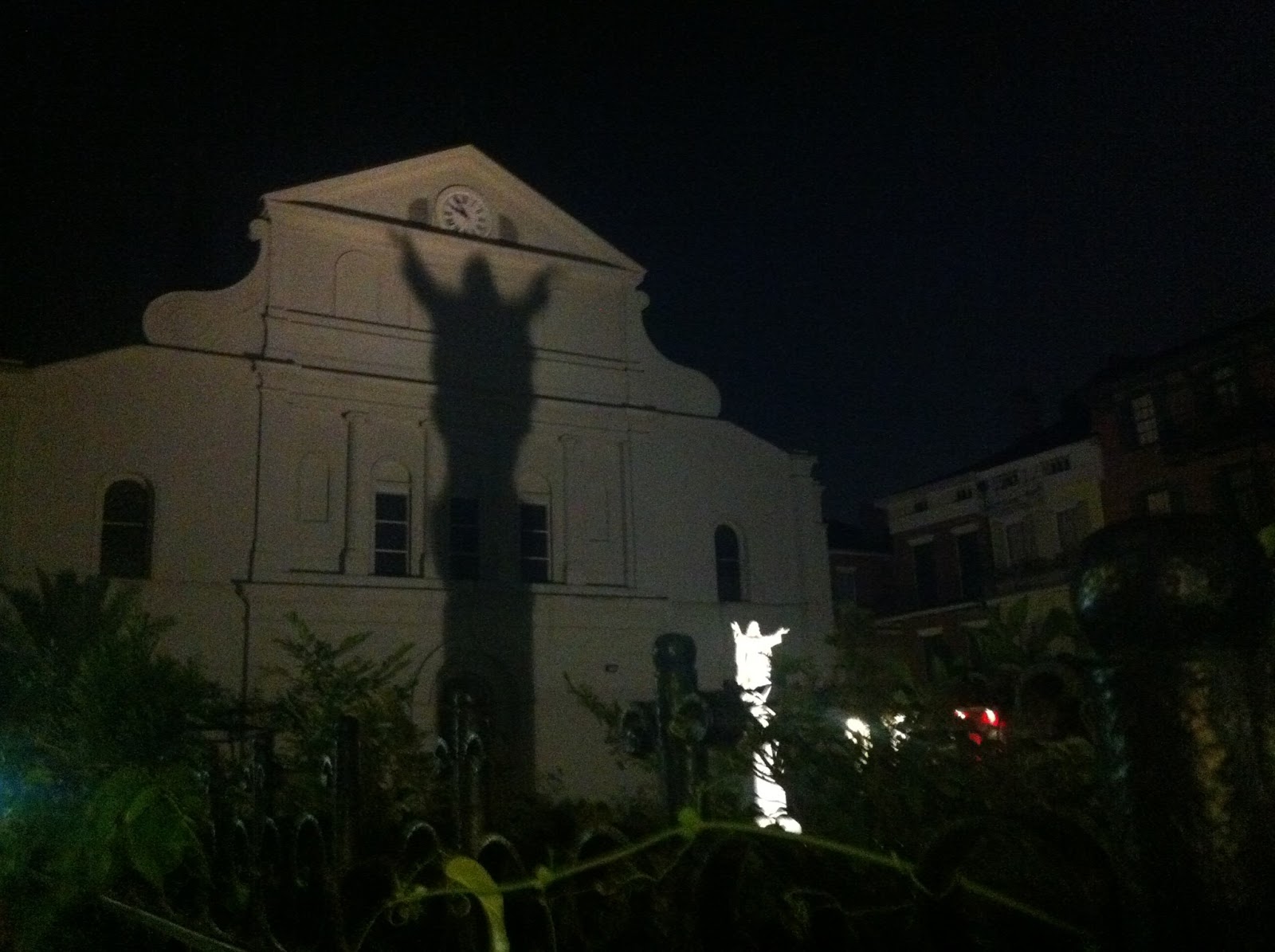
Time passes. I meet up with my roommate and go on a ghost tour. Buy one Hurricane, get one free…

image
We were in the Beast group

image
“Creepy Jesus Shadow”

After the tour was over, Eliza and I took a brief walk down Bourbon Street. Thankfully, no pictures exist of that excursion.

The next morning (Friday) I went to a useful workshop about marketing taught by Matt Schwartz. And then I went to panels and readings.

image
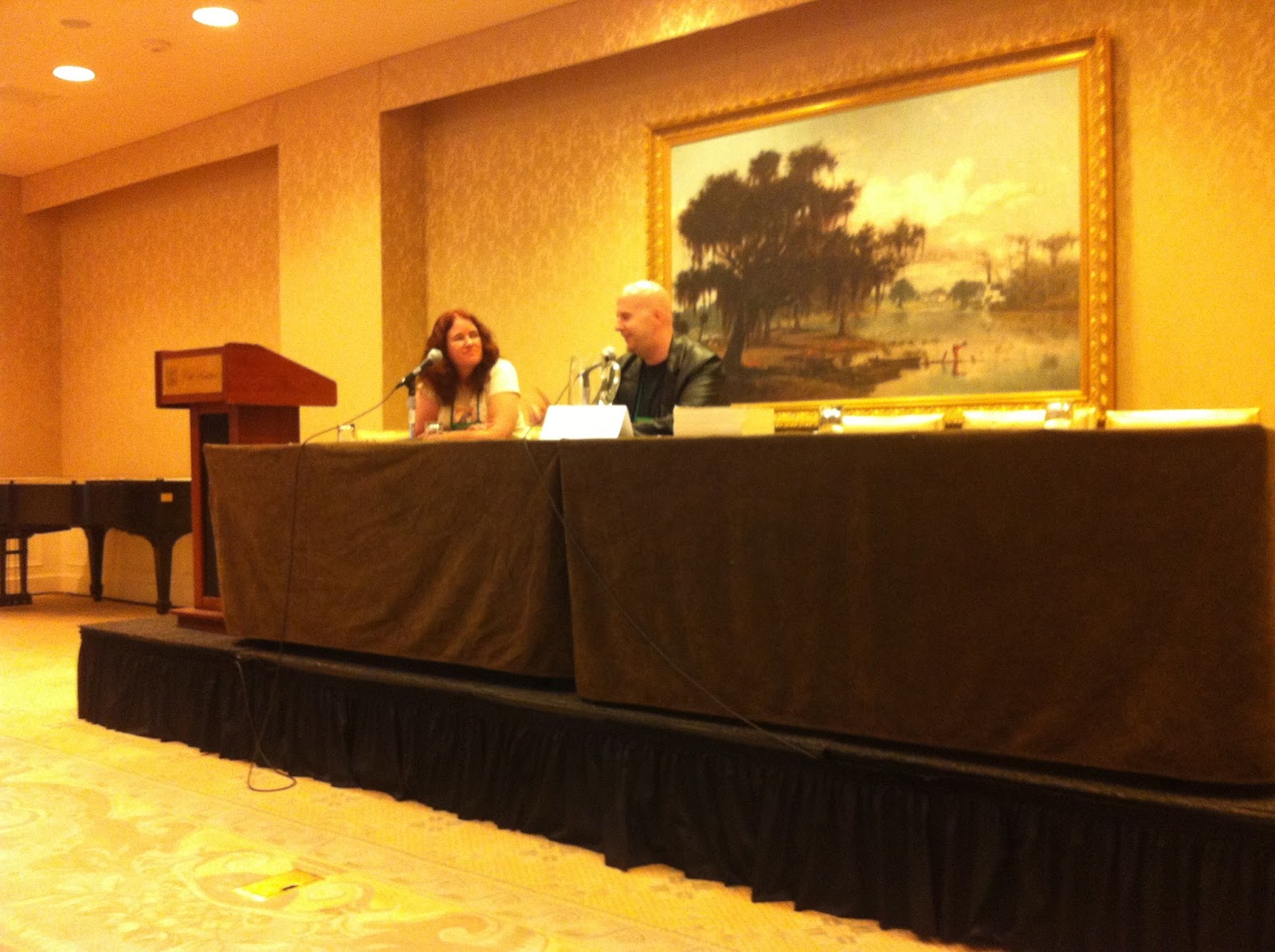
Lisa Morton interviews John Joseph Adams

image
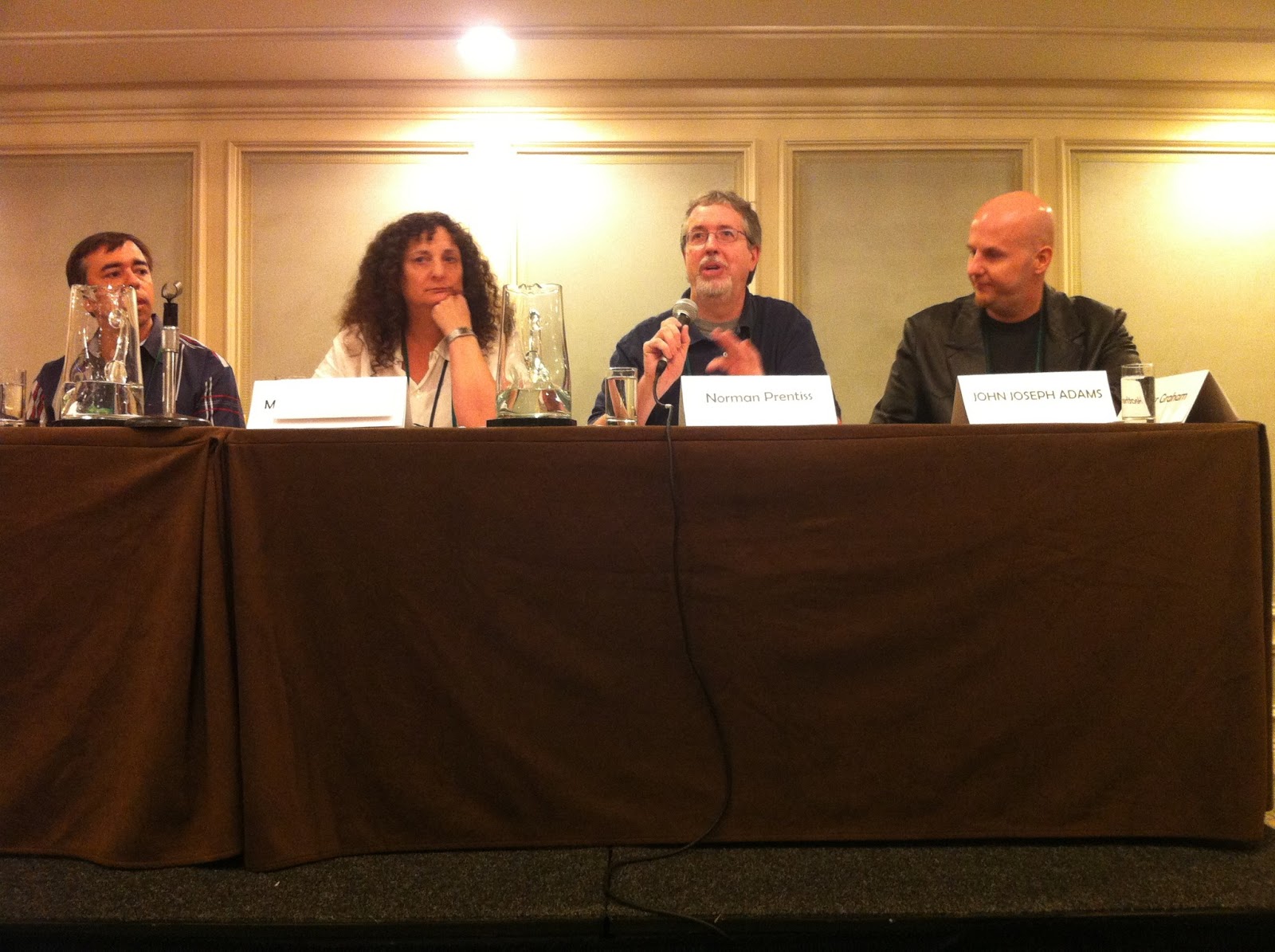
Selling Your Short Story Panel: Simon McCaffery, Ellen Datlow, Norman Prentiss, John Joseph Adams

image
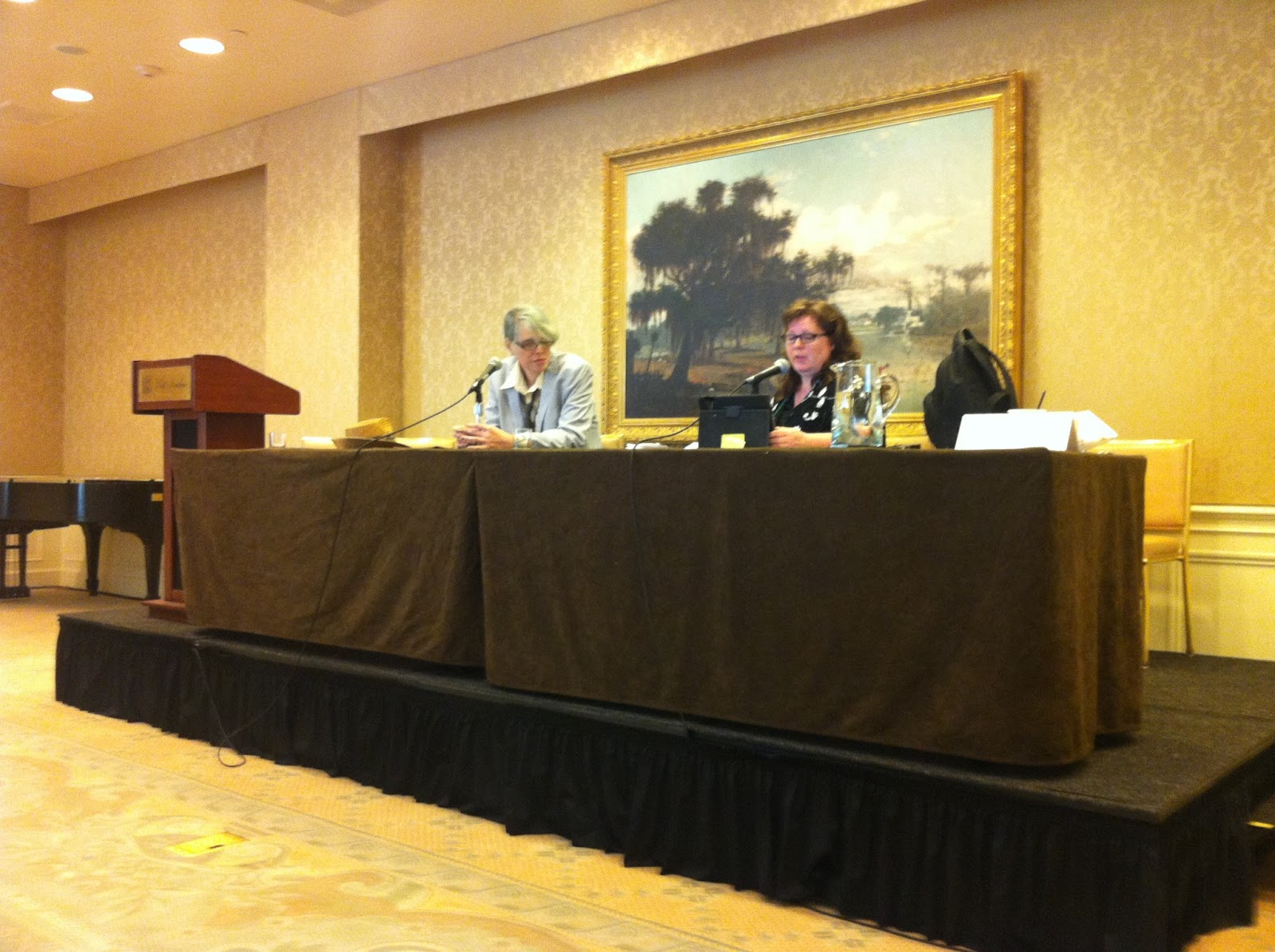
CaitlĂ­n R. Kiernan is interviewed by Angel Leigh McCoy

Dinner was at a Paris-style place. I enjoyed the Shrimp Creole and a Bloody Mary. Then I returned for more.

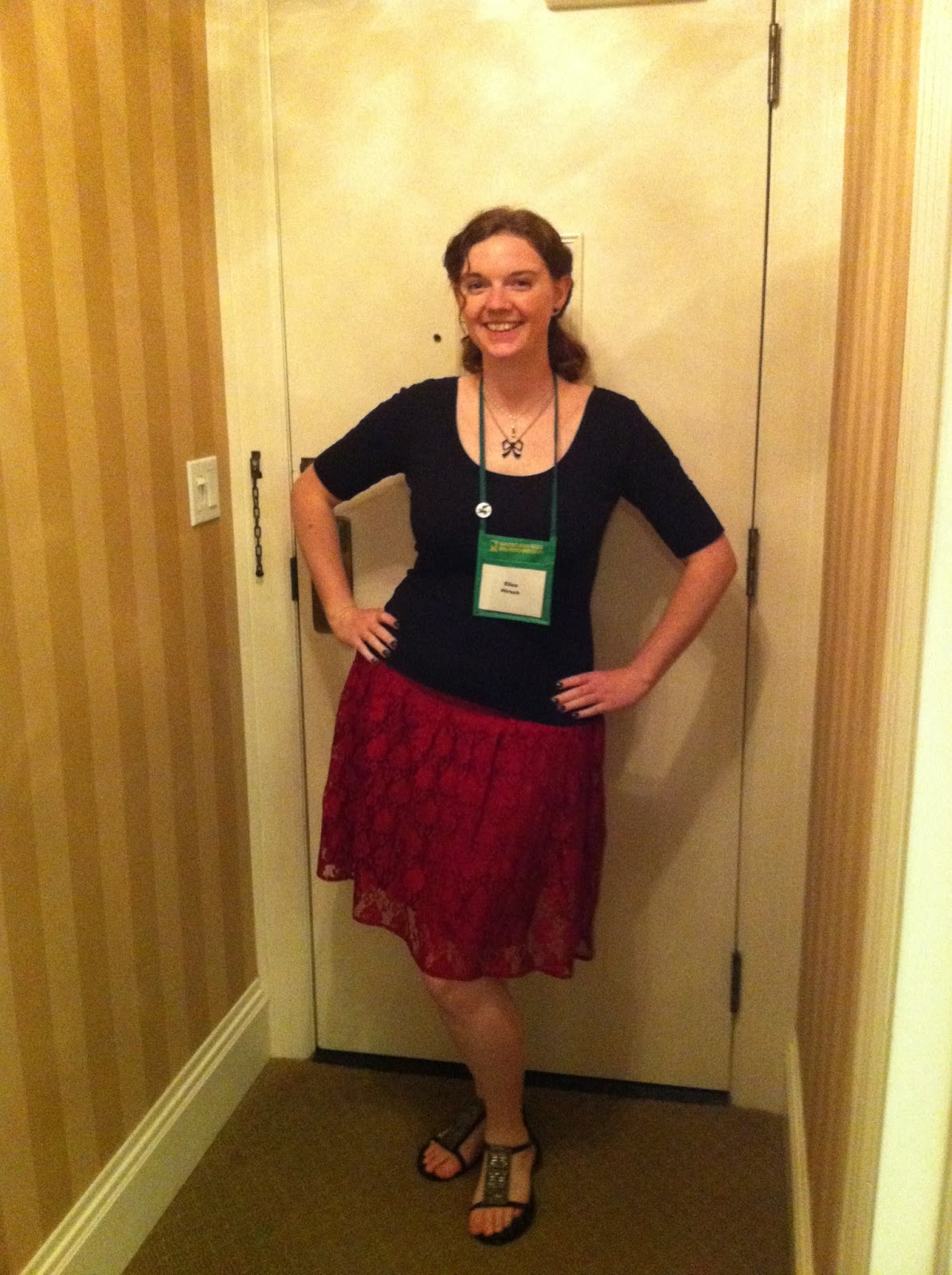
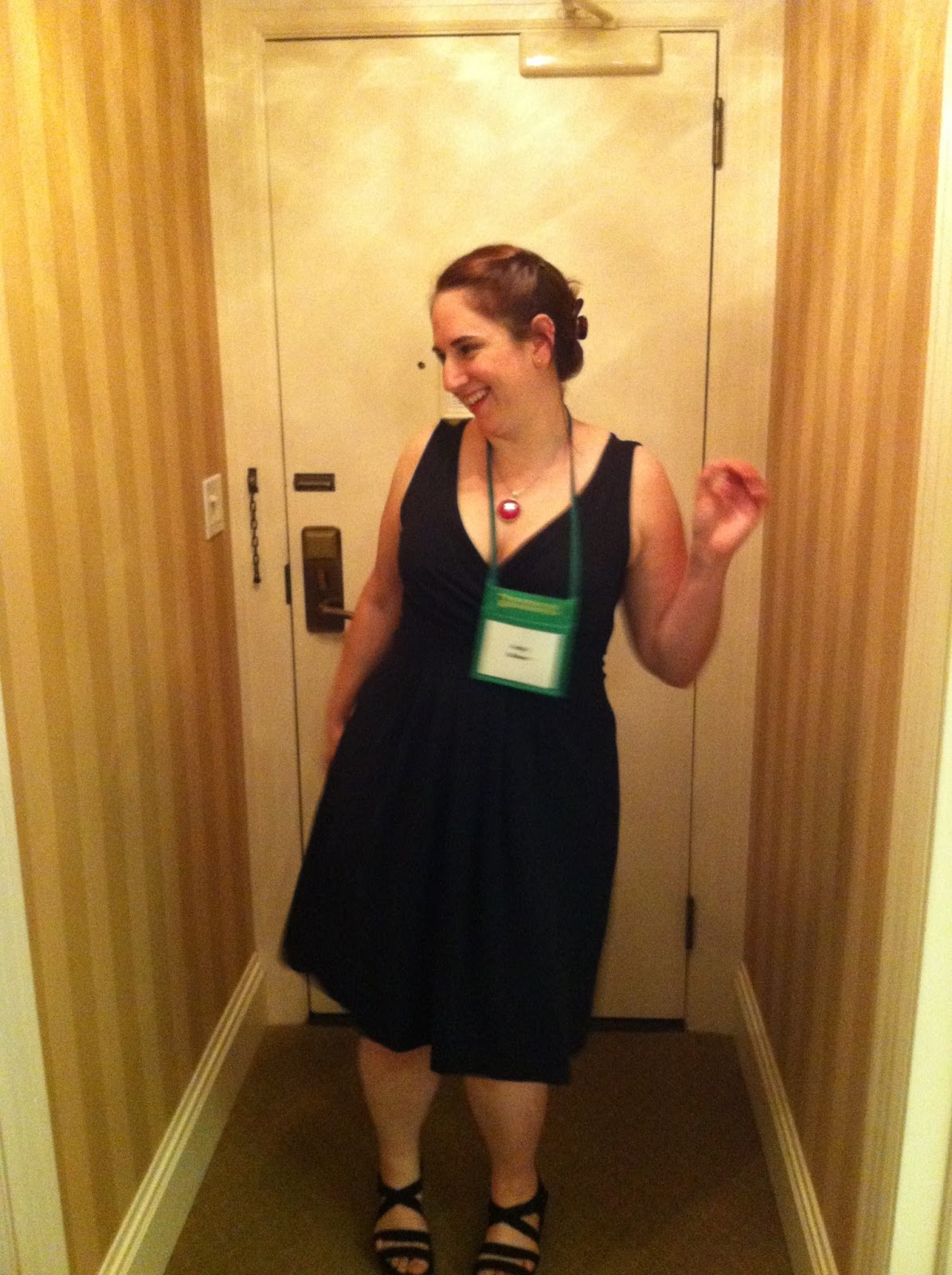
Eliza and I dressed up for the dance.

image
Eliza looking lovely

image
Me goofing around

Next day more panels and readings. And a Kaffeeklatsch with CaitlĂ­n R. Kiernan.

image
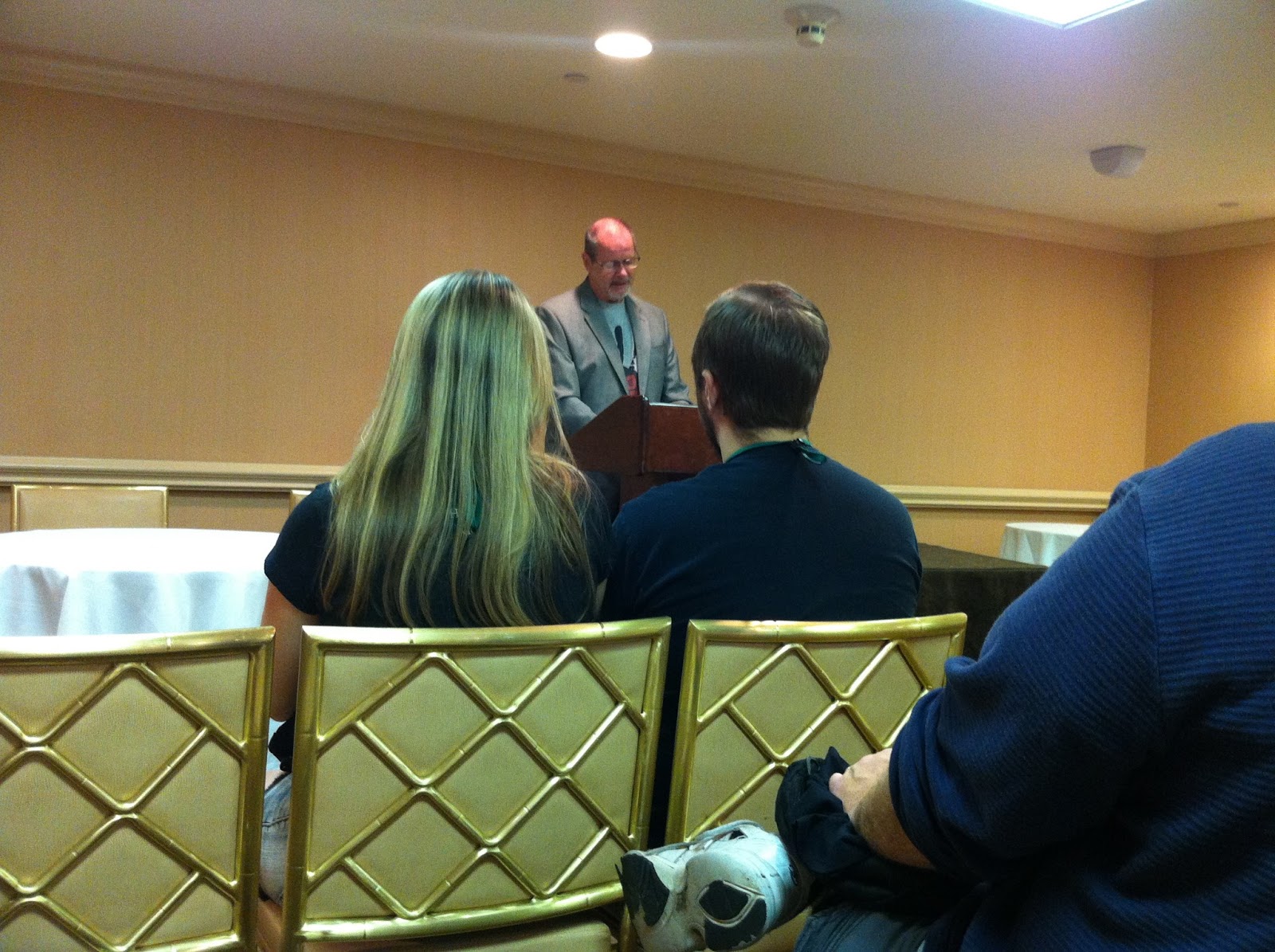
Robert McCammon, reading

image
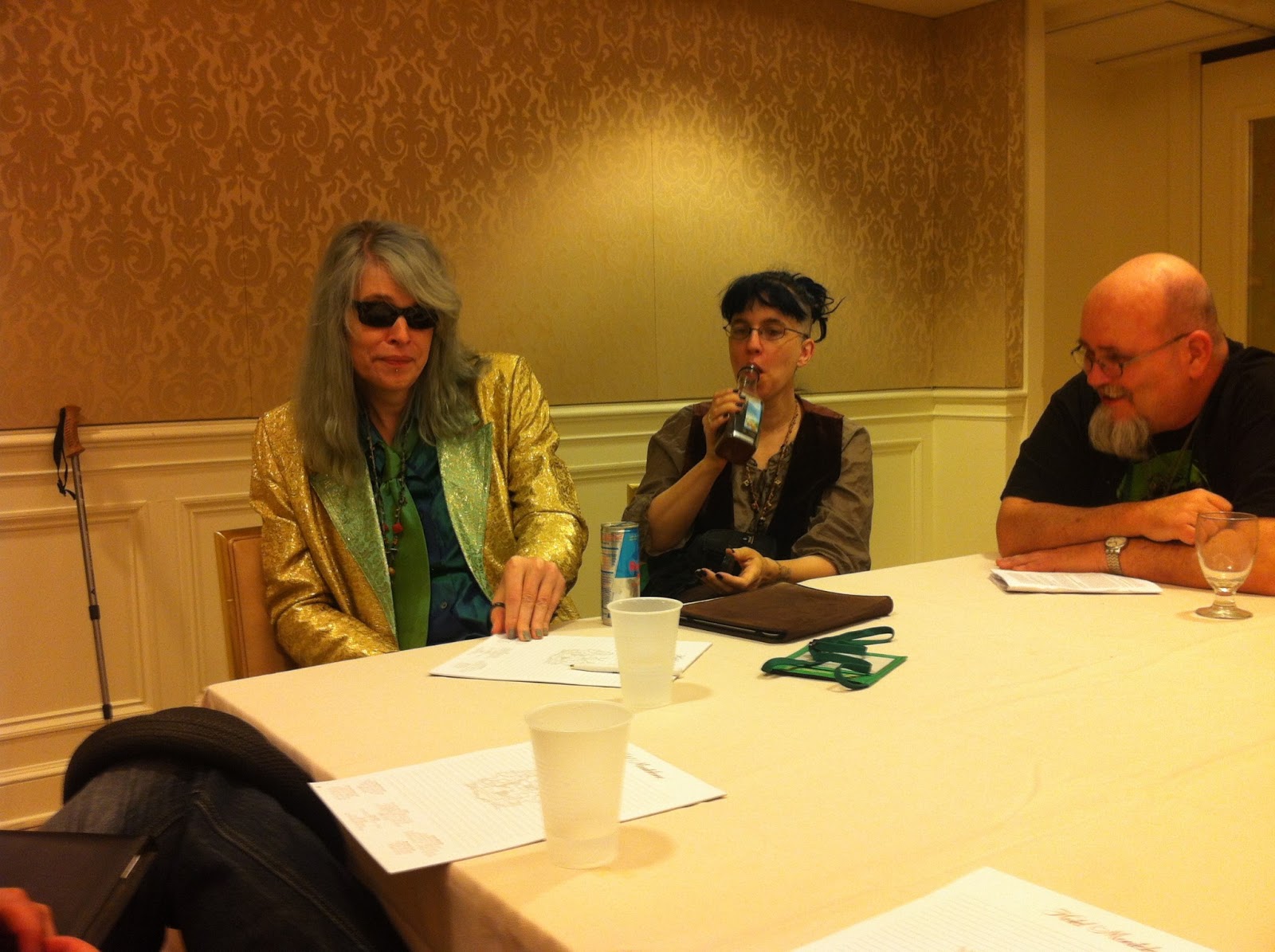
Kaffeeklatsch: CaitlĂ­n R. Kiernan (Best two and a half hours of the con)

For lunch I joined a group at Mr. B’s for seafood gumbo and a Bloody Mary.

image
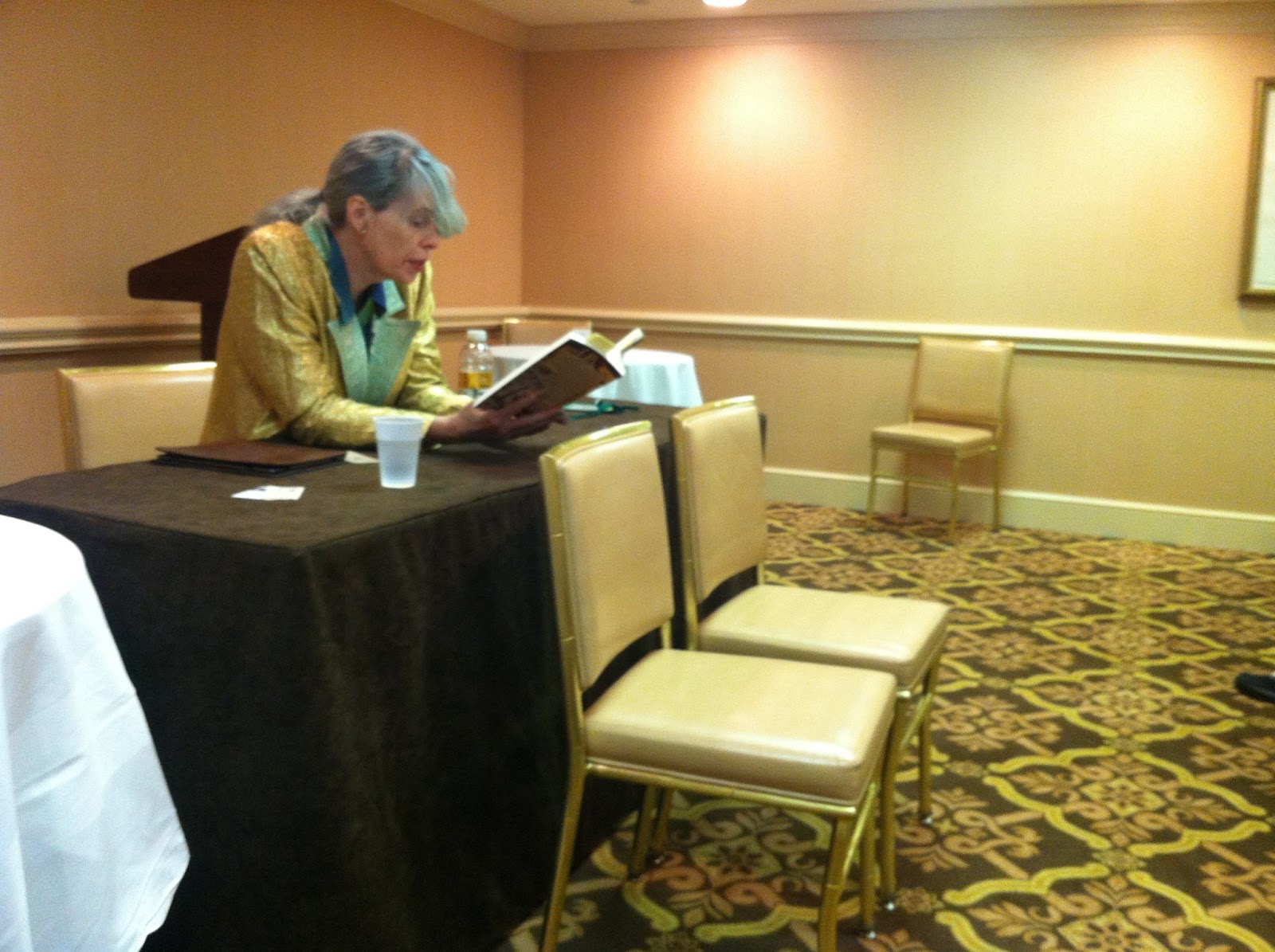
CaitlĂ­n R. Kiernan, reading

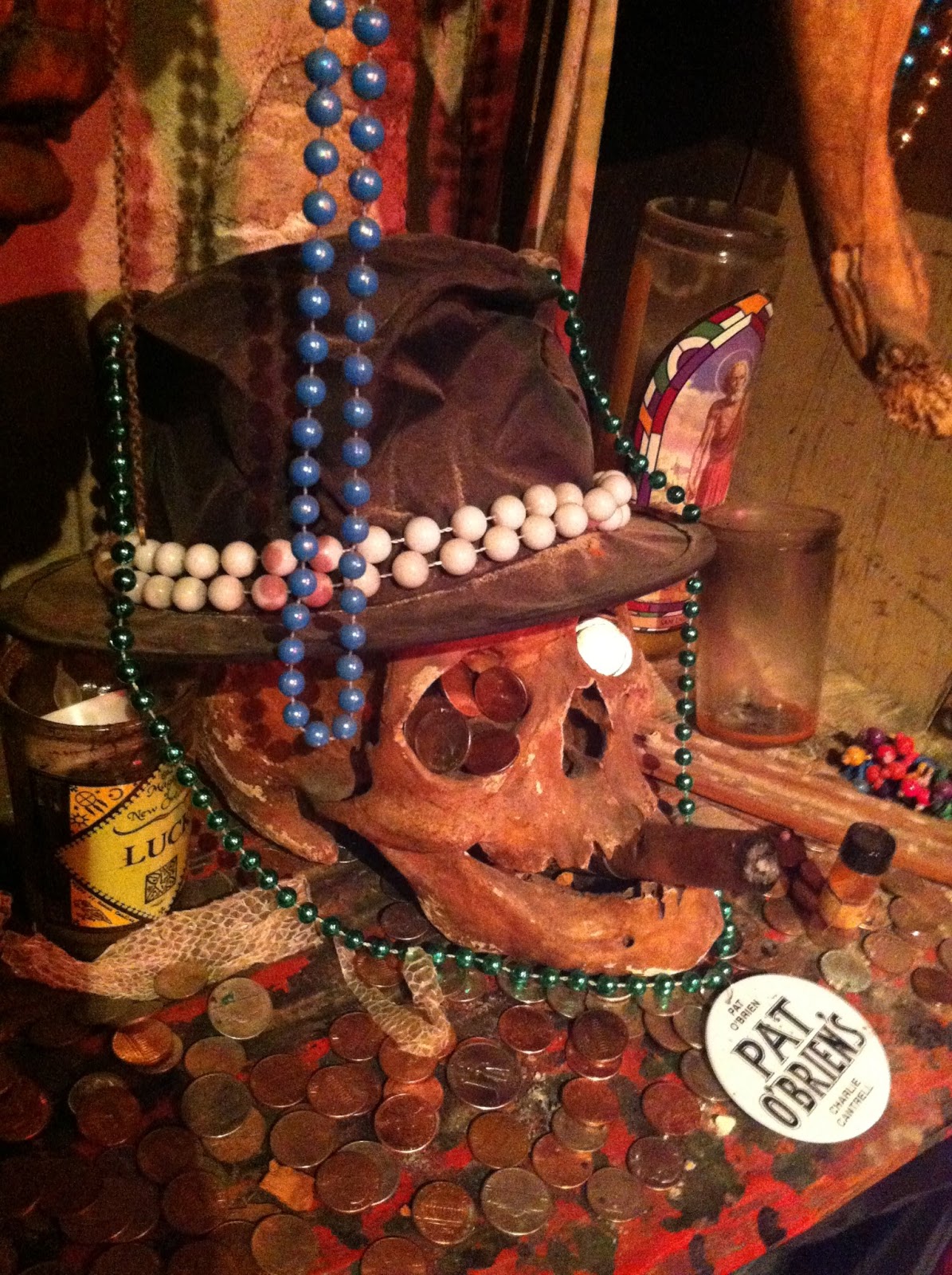
Eliza and I took a break to go to the Voodoo Museum with a stop at the Faulkner House and another for daiquiris.

image
Voodoo Museum

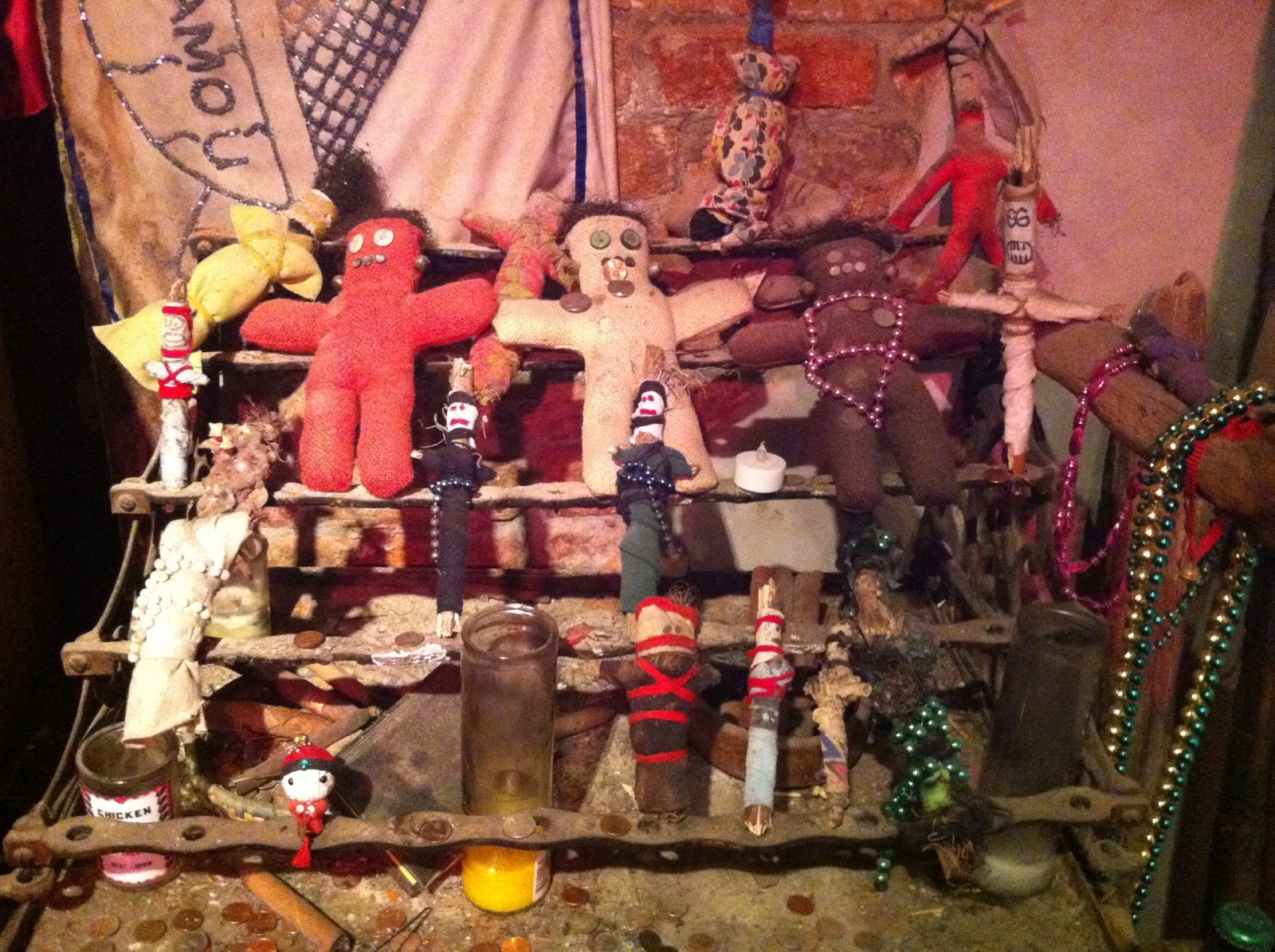
image
Voodoo dolls

image
Offerings at the Voodoo Museum

That evening I went to the Bram Stoker Awards, but I was too busy telling jokes and stuffing my face to take crummy camera phone pics.

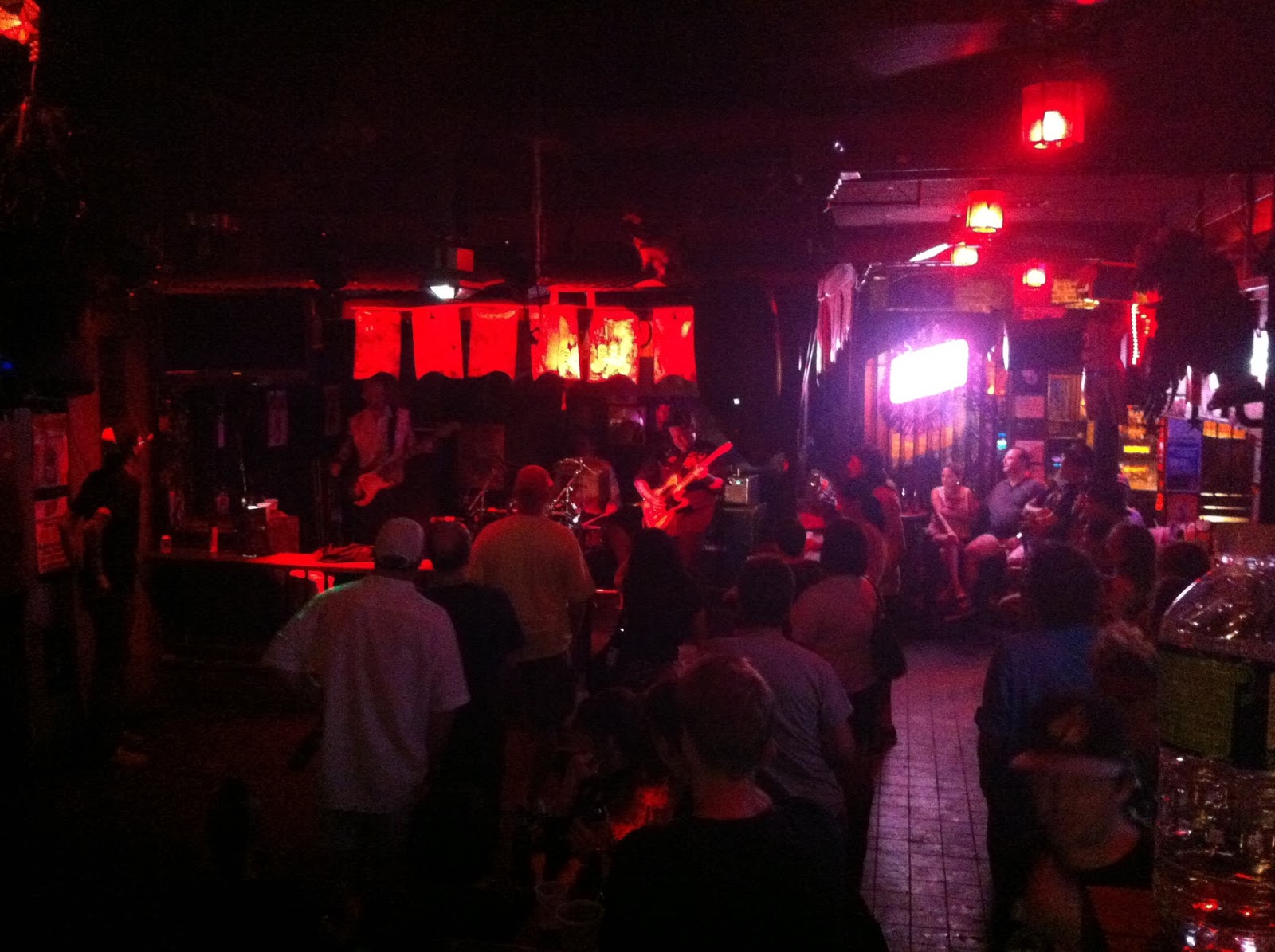
image
Eliza and I went to see fellow writer Sanford Allen play a gig with his band Hogbitch at Checkpoint Charlie’s

Sunday morning arrived fast. As an aside, I ate almost every breakfast at Café Beignet. Fabulous Cajun Hashbrowns and omelets.

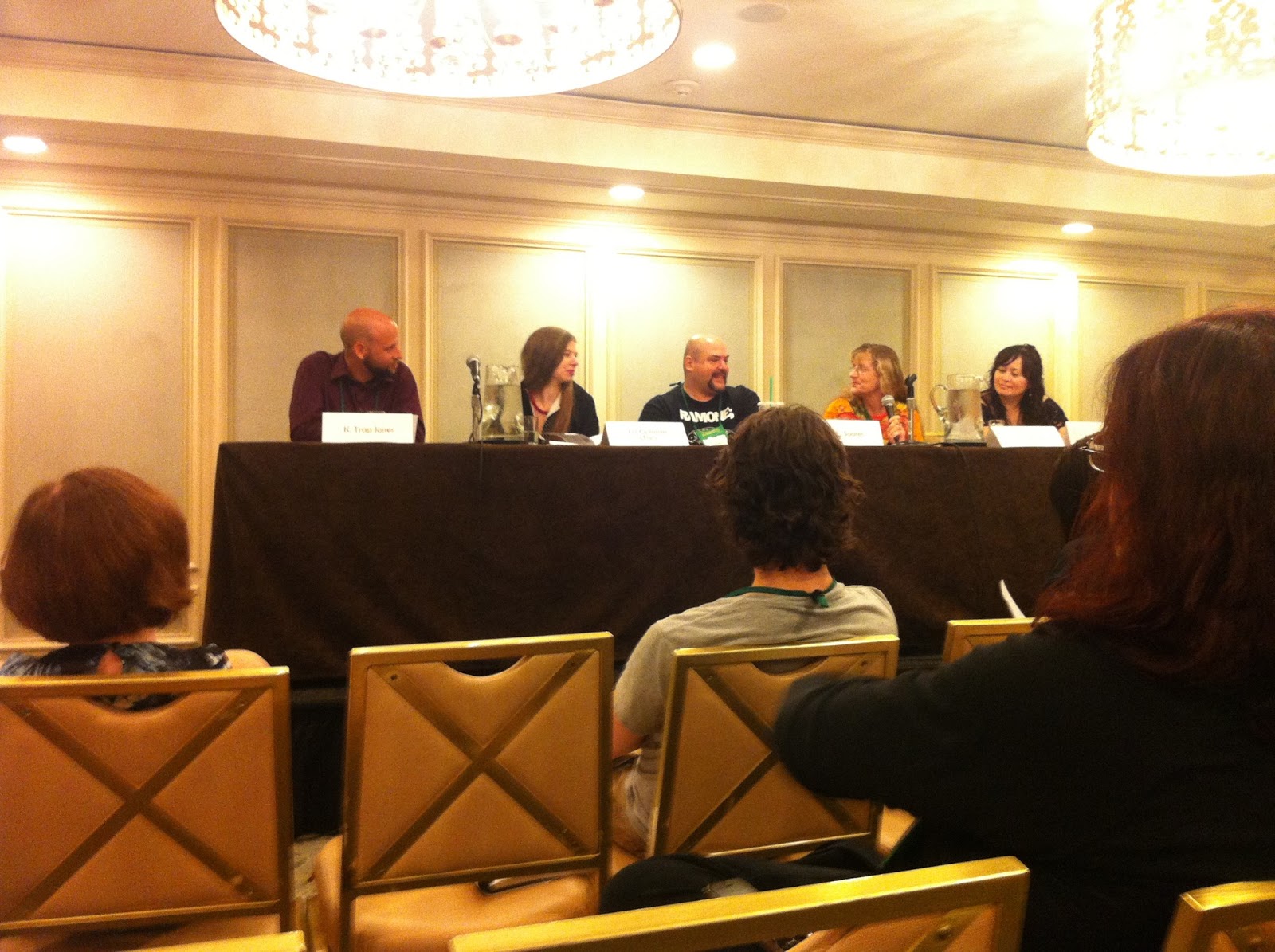
image
Advice for New Writers Panel: K. Trap Jones, Liz Gorinsky, L. L. Soares, Yvonne Navarro, Rena Mason

I also went to the dialogue panel but didn’t take a photo. Too busy scribbling notes.

image
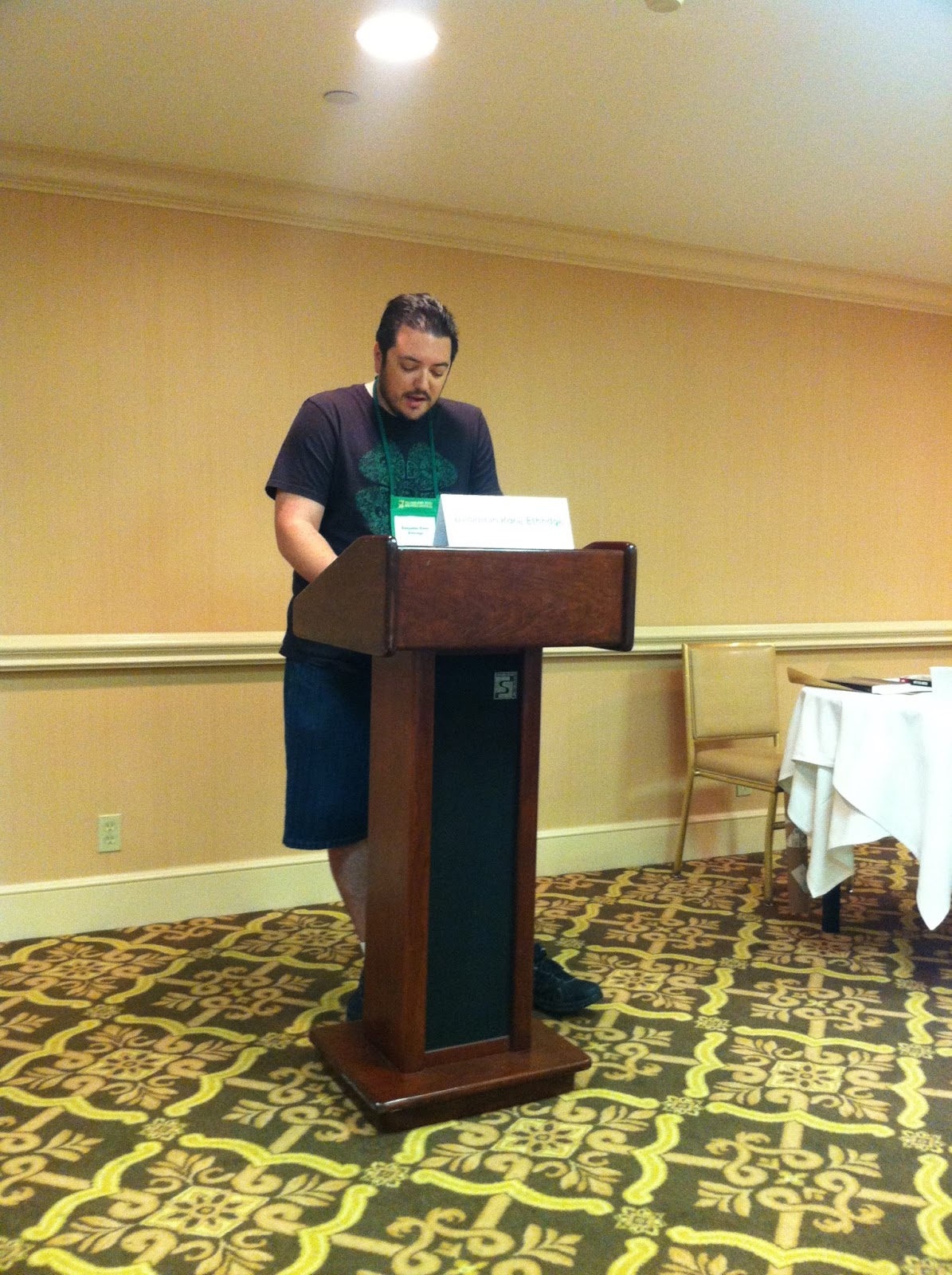
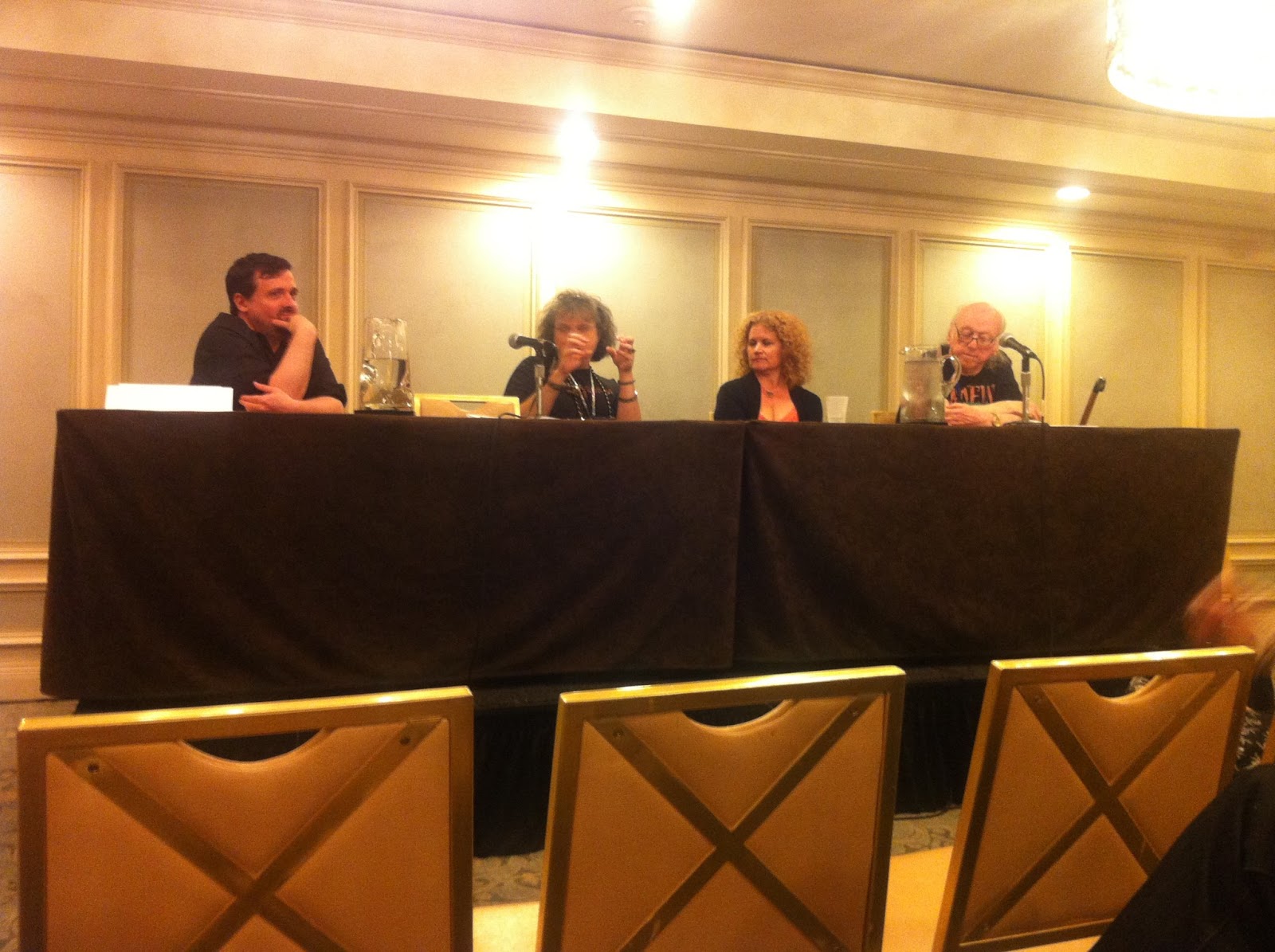
The Future of Writing Panel: Peter Giglio, Jason V Brock, Alexandra Sokoloff, William F. Nolan

After the closing ceremonies I joined up with some cool people, ate lunch, walked around and imbibed a lot–including a stop at Pat O’Brien’s for a Hurricane. Also, absinthe.

image
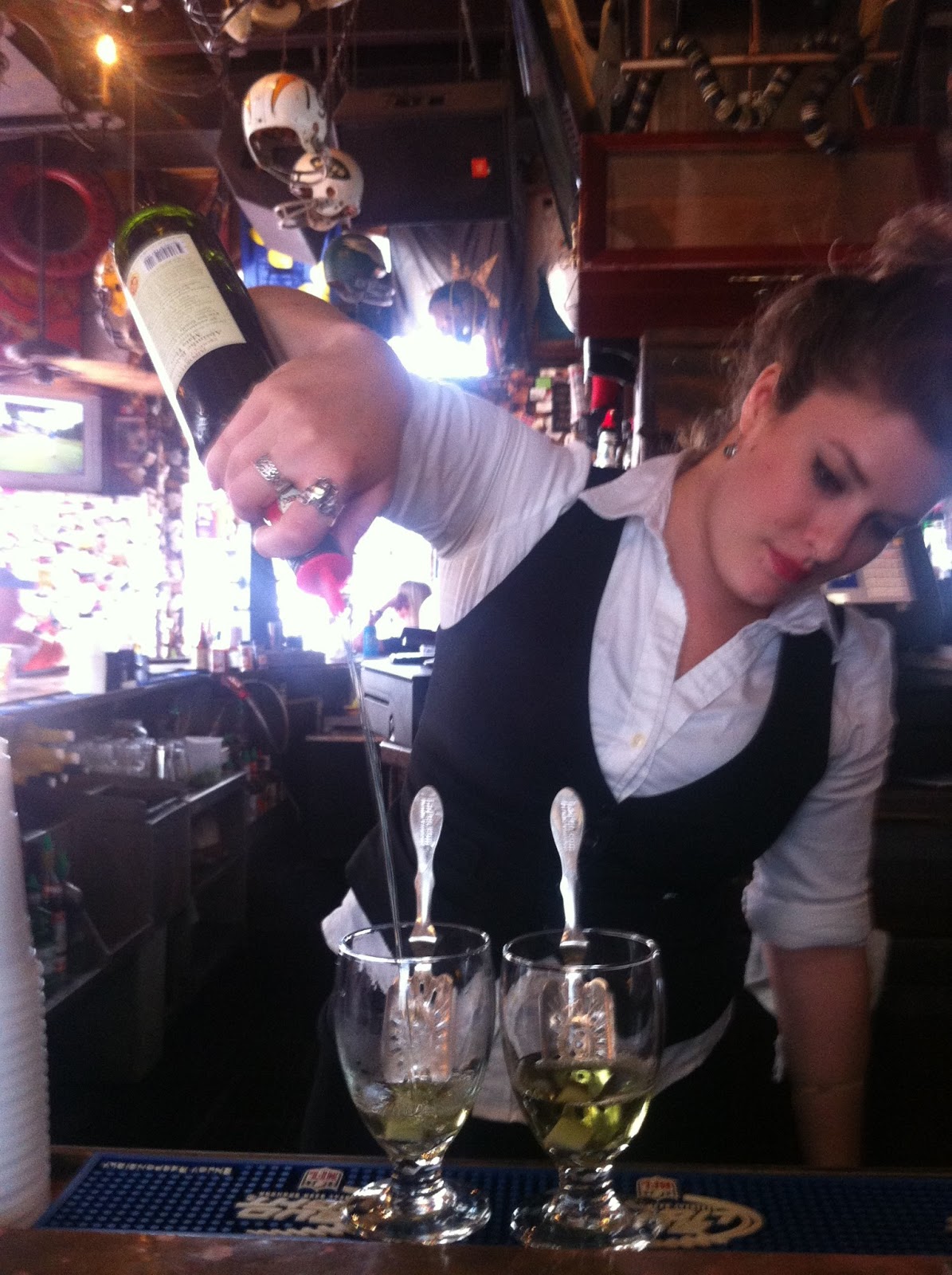
At The Olde Absinthe House, the bartender prepares our drinks

image
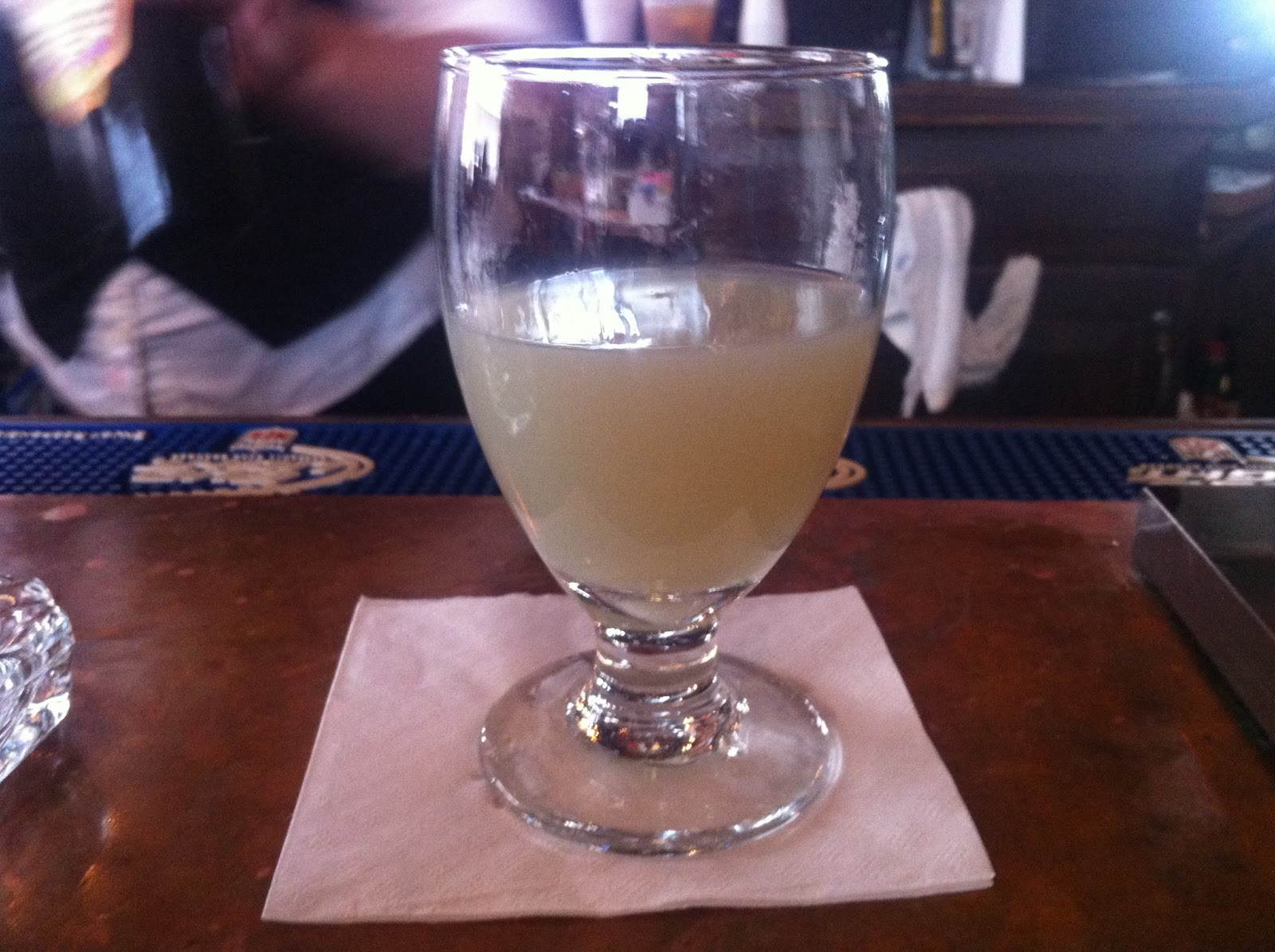
My glass of Mata Hari absinthe. Very tasty. The anise was subtle.

Sunday night also involved a snack at Daisy Duke’s and a lot of packing. Monday morning I caught a shuttle to the airport and had an uneventful trip home.

Can’t wait for next year in Portland, OR!

Jason_V_Brock

18 Jul: Collings Notes: Jason V Brock, SIMULACRUM AND OTHER …

Simulacrum and Other
Possible Realities

Jason V. Brock.

Hippocampus

ISBN13: 97801061498-055-1

2013,
$20.00, Trade paper

It sometimes seems that
stories—often much like their authors—have shapes and textures. Some feel warm
and fuzzy; others are free-form, open, unrestrained; still others are
distanced, controlled and controlling.

After reading the stories and
poems that comprise Jason V Brock’s

Simulacrum
and Other Possible Realities,

I realized that no one else could have
written these pieces, brought the same sharpness of focus, the same intensity,
the same crispness of intellect to bear on such a variety of subjects. I’ve
only met Jason once, at the 2012 Horror Writers Association Conference, when he
served as a mediator-of-sorts between Rocky Wood and me on a Stephen King
panel. Rocky was having serious problems speaking, so as others on the panel
contributed their ideas, he wrote his responses on his computer; when the time
came, Jason read them aloud and commented on them. At the same time, he
re-stated panelists’ comments and audience questions for me, since I could frequently
neither hear nor understand them. I was impressed with his skill in handling
several tasks simultaneously, in remaining true to the individuals’ intentions
and at the same time bringing a unique perspective to them. I left the panel
grateful to have had his help and to have met him.

The stories and poems in Simulacrum fit perfectly with my view of
the author. They try to mediate, to transliterate as it were, from one mode of
thinking to another. The headnote story, “What the Dead’s Eyes Behold” is
rather like a 21st-century version of Robert Browning’s remarkable
study of abnormal psychology, “Porphyria’s Lover.” In it, the narrator speaks
of looking into his beloved’s eyes and, seeing there an instant of perfect,
undiluted love for him, “found/A thing to do”—he wraps her hair three times
around her throat and strangles her, thus encapsulating forever that single
moment. “And yet,” he notes almost as an afterthought, “God has not said a
word.”

In Brock’s story, the backgrounds
are diametrically opposed to Browning’s. There is no quest for an eternal
moment caught in an instant, for perfect love; instead, the character and his
victim/sacrifice, Calliope, exist in a world without love, without eternals.
And instead of searching for a phantom togetherness in a fraction of time, they
deny that any such togetherness can exist. All that exists is death. And, for
the narrator, the moment when living eyes look upon death. Hers…and his.

Browning’s lover found solace and
comfort; Brock’s cannot.

Near the end of the collection,
Brock has included his stand-alone novella, “Milton’s Children.” In some ways
it is the opposite of “What the Dead’s Eyes Behold.” It is external and
objective, the report of an expedition to a cluster of previously unknown
islands near the Antarctic. Yet, inexorably, what seems like an everyday
mission rapidly shifts to a phantasmagoria of horror ultimately equally
inexplicable and inconclusive. (For a longer review of the story, see

http://michaelrcollings.blogspot.com/2013/01/jason-v-brocks-miltons-children.html

or

http://hellnotes.com/miltons-children-book-review

).

In between, Brock has incorporated
a wide range of stories that challenge the notions of normalcy, rationality,
and acceptability. “The Central Coast” has at its core a haunted bottle of wine
and the unforeseen consequences of a single drink. In “One for the Road,” there
is clearly a serial killer and a victim; the quandary is determining which is
which…and who is who—a leitmotif that
recurs in story after story. “The Hex Factor” takes as a given a world in which
hexes and magic not only work but are proprietor; what would the results be if
someone stole another’s Grimoire? “Valor: A Fable” is, again, a story about
choice and consequence, told in a just-so-slightly archaic diction that
perfectly weds tale to meaning.

And more….

Throughout, Brock deals with
questions of death and mortality (with a few glances at immortality), of
consequence, of choice, of the nature of identity itself. He does not hesitate
to incorporate politics, morality, and social causes into the fabric of the
stories, but in each instance, what might be merely an authorial intrusion
becomes welded to the story itself; to think about vegetarianism in “Milton’s
Children,” for example—as the opening pages insist that readers do—is to
prepare for the climax, for the realities that the characters discover on the
island.

Intercut with the stories are
poems that are as compressed and as trenchant as the tales themselves.
Typically, Brock explores multiple approaches: line-length free verse;
occasional spates of rhyme; typography and the visual effects of composition;
even variations in fonts to suggest shifts in meaning.

Taken as a whole,

Simulacrum and Other Possible Realities

is

echt

-Jason V. Brock. Each story,
each poem carries his unique imprint. Some might take longer than others to resolve,
but I the act of considering each lies a significant portion of their power.

Recommended.